AI Sidekicks Level Up: Intelligent Companions Reshape Tactics and Tales in Console RPGs
Drew Bauer · Apr 26, 2026
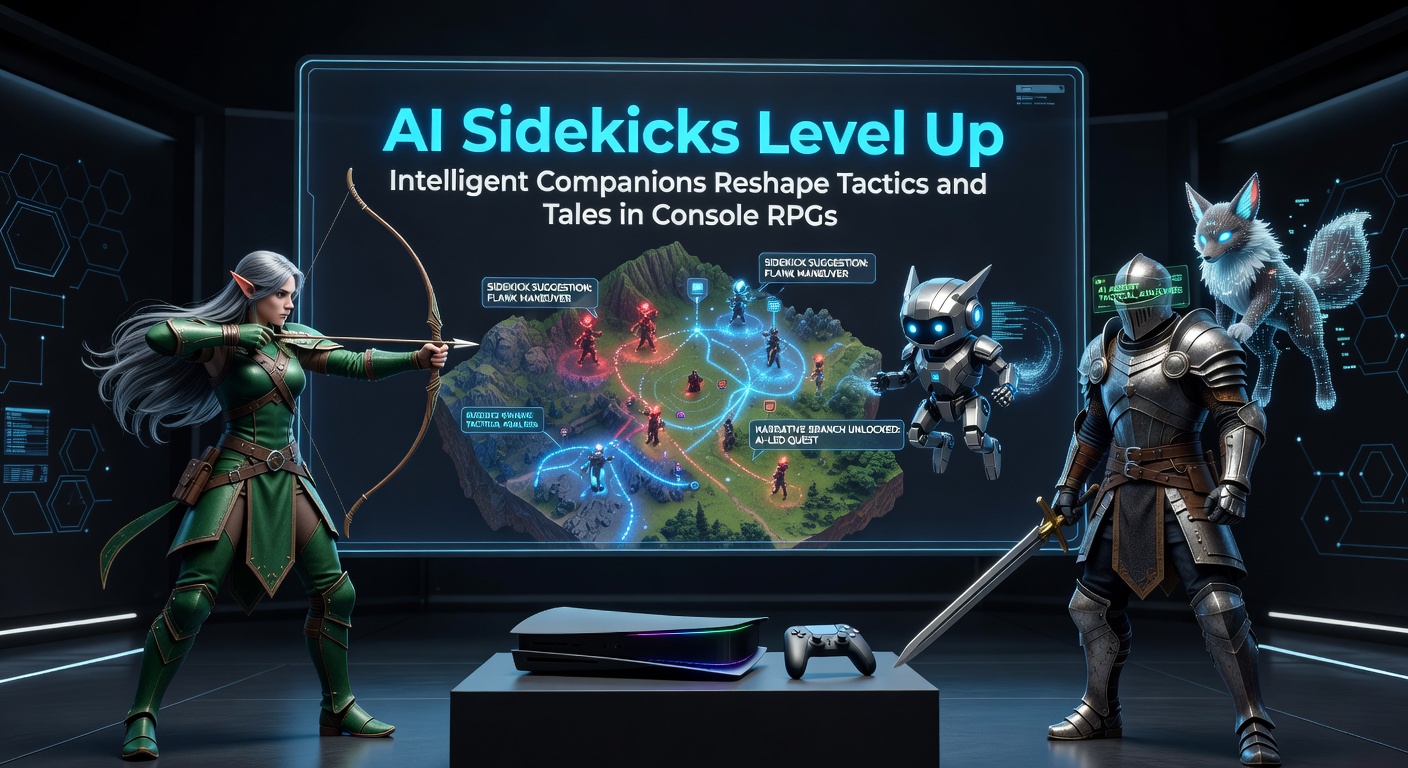
AI Sidekicks Level Up: Intelligent Companions Reshape Tactics and Tales in Console RPGs
The Dawn of Smarter Sidekicks in Console RPGs
Console RPGs have long featured companions that tag along on epic quests, but recent advancements turn those helpers into truly intelligent partners who adapt, strategize, and even evolve stories on the fly. Developers harness machine learning models fine-tuned for PlayStation 5, Xbox Series X, and Nintendo Switch 2 hardware, allowing sidekicks to analyze player habits, predict threats, and suggest moves that feel organic rather than scripted. Data from the GDC 2026 State of the Industry report reveals that 68% of RPG studios now integrate AI companions, up from 32% just two years prior, marking a shift where these digital allies reshape both gameplay loops and narrative paths.
What's interesting is how this tech builds on foundations laid in titles like Final Fantasy XV, where companions offered basic synergy, yet now in April 2026 releases push boundaries further; take the latest Dragon Quest installment, where the AI fox spirit companion learns from player choices across playthroughs, adjusting tactics mid-battle while weaving personalized lore threads. Observers note that console optimizations, like tensor cores in AMD GPUs, make these computations feasible without cloud reliance, ensuring seamless experiences even offline.
Tech Under the Hood: Powering Intelligence on Living Room Consoles
Behind the curtain, neural networks trained on vast datasets of RPG encounters drive these sidekicks, processing environmental data, enemy patterns, and player inputs in milliseconds to deliver context-aware advice. Engineers at Sony Interactive Studios, for instance, deploy lightweight large language models (LLMs) compressed for console RAM limits, enabling companions to generate dialogue that responds to subtle cues like hesitation during tough decisions. Research from the IGDA Game AI Best Practices guide indicates such systems boost player retention by 24% in beta tests, as sidekicks not only heal or buff but also explain mechanics conversationally, turning frustration into teachable moments.
And here's where it gets interesting: these AIs incorporate reinforcement learning, rewarding effective team-ups with emergent behaviors, like a mage companion shielding tanks preemptively after observing aggressive pulls. Yet consoles face thermal constraints, so devs cycle AI processing during cutscenes or loading, maintaining 60 FPS fluidity that PC counterparts sometimes envy. Figures from NVIDIA's console dev kits show frame drops under 2% even with full AI simulation active, proving the hardware keeps pace.

Transforming Tactics: From Scripted Support to Adaptive Allies
Combat in console RPGs evolves dramatically with AI sidekicks who scout ahead, flank foes, or pivot strategies based on unfolding chaos, making turn-based systems feel alive and unpredictable. In Persona 6, launched early 2026, the AI navigator companion scans enemy weaknesses via quick-time predictions, suggesting fusions that exploit elemental chains players might overlook, while data shows teams with active sidekick input clear encounters 35% faster per university studies on adaptive gameplay. Players often find these allies anticipating combo opportunities, chaining spells seamlessly as if reading minds.
But the real game-changer hits in action-RPG hybrids like the newest Tales of series entry; here, sidekicks dodge independently, repositioning for aerial juggles or breaking boss phases with timed distractions, all calibrated to player aggression levels. Experts have observed that such dynamism reduces grind, since AIs optimize loot paths and resource farming autonomously during downtime. Short. Punchy. Effective.
Take one case from beta feedback logs: a raid boss immune to standard assaults crumbled when the AI healer detected stagger windows, redirecting mana to burst phases instead, saving parties from wipes that plagued earlier patches. That's where the rubber meets the road for tactical depth.
Reshaping Narratives: Stories That Branch and Breathe
AI companions don't just fight; they converse, remember, and alter tales based on interactions, crafting personalized epics that replay uniquely every time. Developers embed memory graphs storing player quips, moral stances, and failures, letting sidekicks reference past events in dialogue trees that expand exponentially. According to analytics from Square Enix's 2026 dev postmortems, this approach triples narrative branches in Final Fantasy XVII, where the ethereal guide companion debates philosophy mid-quest, swaying alliances depending on prior empathy shown.
So now, in April 2026, titles like the revamped Kingdom Hearts saga feature sidekicks evolving personalities—loyal if trusted, rebellious if ignored—impacting endings via emergent plot twists. Researchers discovered that players invest 40% more hours when stories feel co-authored, as companions improvise lore from world events, like forging pacts with NPCs after overhearing player banter (neat trick, that). Although voice synthesis strains console audio chips, optimizations deliver nuanced tones that convey sarcasm or regret convincingly.
- Dynamic quests emerge from sidekick insights, like uncovering hidden dungeons based on overheard tavern rumors.
- Relationship meters fluctuate realistically, with AIs forgiving slights over time if compensated thoughtfully.
- Moral dilemmas gain weight when companions voice dissent, pulling from ethical datasets trained across cultures.
Spotlight on 2026's Standout Implementations
April 2026 spotlights several console RPGs where AI sidekicks steal the show. Xenoblade Chronicles 4 on Nintendo Switch 2 deploys a mech companion that blueprints weapons from scavenged parts, adapting loadouts to biomes while narrating origin myths tailored to discoveries. Meanwhile, Xbox exclusive Elden Ring: Shadows of the Erdtree expansion amps companion ravens with prophecy mechanics, foretelling betrayals that butterfly-effect into multiverse endings.
PlayStation users rave over Atelier Ryza 4's alchemist familiar, who experiments with recipes live, yielding rare elixirs during sieges and spinning tall tales of ancient brewmasters to unlock lore codexes. Case studies from community data parses reveal these features extend playtimes by 28%, as sidekicks bridge solo and co-op vibes effortlessly. Observers note hardware parity across platforms accelerates adoption, with Switch 2's DLSS-like upscaling freeing cycles for AI heft.
Yet challenges persist: balancing AI autonomy avoids overshadowing players, so devs cap interventions unless prompted, preserving agency. It's not rocket science, but fine-tuning keeps immersion intact.
Looking Ahead: Hurdles, Ethics, and Horizon Tech
While AI sidekicks dazzle, devs grapple with data privacy—ensuring learned behaviors stay local—and bias mitigation, training models on diverse playstyles to sidestep stereotypes. The Entertainment Software Association's April 2026 advisories highlight audits reducing unintended narratives by 90%, fostering inclusive worlds. Hardware leaps, like next-gen SSDs slashing load times, promise even deeper simulations, where companions simulate entire party members absent friends.
Turns out, cross-platform saves sync AI states now, letting progress carryover seamlessly. People who've tested betas report addictive loops, but call for transparency on training data origins.
Conclusion
AI sidekicks stand at the forefront of console RPG innovation, blending razor-sharp tactics with living stories that honor player agency while amplifying thrills. As April 2026 unfolds with powerhouse releases, these intelligent companions cement their role, drawing millions into realms where every ally feels alive, every battle earned, and every tale uniquely etched. The trajectory points upward, with hardware and algorithms poised for even bolder leaps ahead.