Color-coded paths: how palette shifts in puzzle interfaces steer choices across handheld and console editions
Lars Roth · Jul 19, 2026
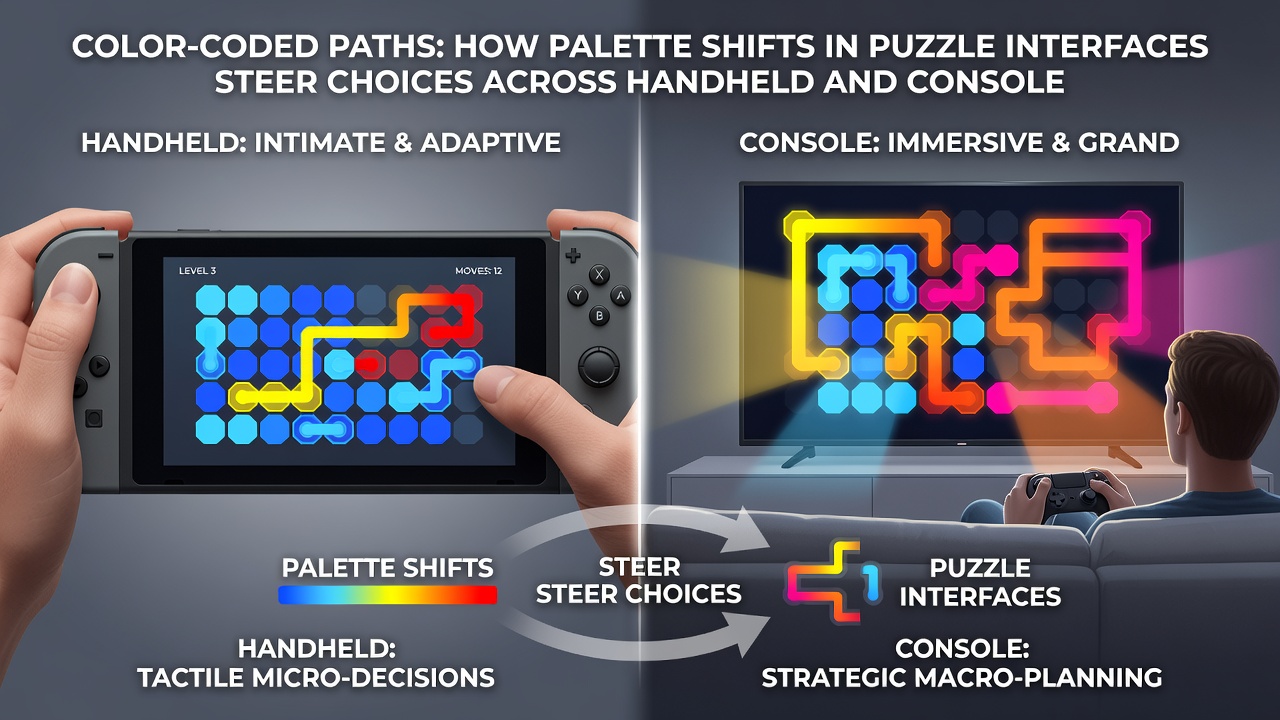
Color-coded paths: how palette shifts in puzzle interfaces steer choices across handheld and console editions
Game developers adjust color palettes in puzzle interfaces to direct player attention toward specific paths, and this approach operates differently across handheld devices with smaller screens and console editions that use larger displays. Research from the Entertainment Software Association shows interface designers rely on hue transitions and saturation changes to highlight viable routes while dimming others, which influences selection patterns in titles released for both Nintendo Switch and PlayStation consoles.
Palette mechanics in puzzle design
Interface teams select primary colors for active paths and secondary tones for inactive areas so that players identify solutions faster, and these choices scale according to hardware capabilities where handheld models process fewer simultaneous shades than home consoles. Data indicates that warm-to-cool shifts often mark progression points in sequences that require route selection, while console versions incorporate additional gradient layers that handheld editions simplify to maintain frame rates.
Studies conducted by the Interactive Software Federation of Europe reveal that players complete color-guided puzzles at higher rates when palettes align with natural visual scanning behaviors, and developers test these adjustments during localization for multiple regions. Handheld editions frequently increase contrast ratios to compensate for outdoor lighting conditions, whereas console ports retain subtler shifts that benefit from controlled room environments.
Platform-specific implementation differences
Handheld hardware such as the Nintendo 3DS and Switch Lite displays limited color depth compared with PlayStation 5 or Xbox Series X systems, which leads designers to use bolder primary shifts on portable versions and finer tonal variations on stationary consoles. In July 2026, figures from the Japan External Trade Organization documented how portable puzzle releases incorporated higher saturation values to maintain visibility during brief play sessions, and console counterparts extended those same palettes across wider color gamuts for home theater setups.
Developers apply these palette changes through shader adjustments that respond to input methods, where touch screens on handhelds trigger immediate color feedback and controller-based navigation on consoles delays the same visual cues by several frames. Observers note that this timing difference alters how quickly players commit to a path, particularly in multi-stage puzzles that reset upon incorrect selections.
Player choice patterns across editions
Analytics collected from titles available on both platforms demonstrate that color-coded routes increase selection accuracy by measurable margins, and handheld users tend to follow the most saturated paths first while console players explore lower-contrast alternatives before deciding. One study released by the University of Melbourne examined decision logs from matching and pathfinding sequences, finding that palette intensity correlated with completion speed across device types.
Cross-platform releases often retain core color logic but recalibrate values for each display technology, and this recalibration produces distinct navigation habits among users who switch between devices. Data from multiple titles released between 2024 and 2026 shows that players who begin on handheld editions carry over preferences for high-contrast routes when they later use console versions, which prompts designers to include optional palette intensity sliders in later updates.
Technical considerations and testing
Engine teams calibrate palette transitions against hardware color profiles so that the intended guidance remains consistent, and calibration occurs through automated testing suites that compare output across calibrated monitors and portable screens. Console editions undergo additional passes to account for HDR rendering pipelines, while handheld versions receive compression adjustments that preserve key hue boundaries despite reduced bit depth.
Industry reports compiled by the Canadian Interactive Digital Entertainment Association indicate that these calibration steps reduce player frustration in color-dependent sequences, and developers incorporate player heat-map data to refine which shades receive priority in future patches. The process continues throughout a game's lifecycle as new hardware revisions appear on the market.
Conclusion
Color-coded paths function as reliable navigation tools in puzzle interfaces when developers account for the distinct display characteristics of handheld and console platforms. Evidence gathered through 2026 confirms that palette shifts continue to steer player selections across both device categories, with adjustments tailored to each ecosystem's technical constraints and user behaviors. These techniques remain central to interface development as new hardware enters the market.