Community Echoes: Player Forums Driving Iterative Tweaks in Multiplayer Online Battlers
Drew Bauer · May 19, 2026
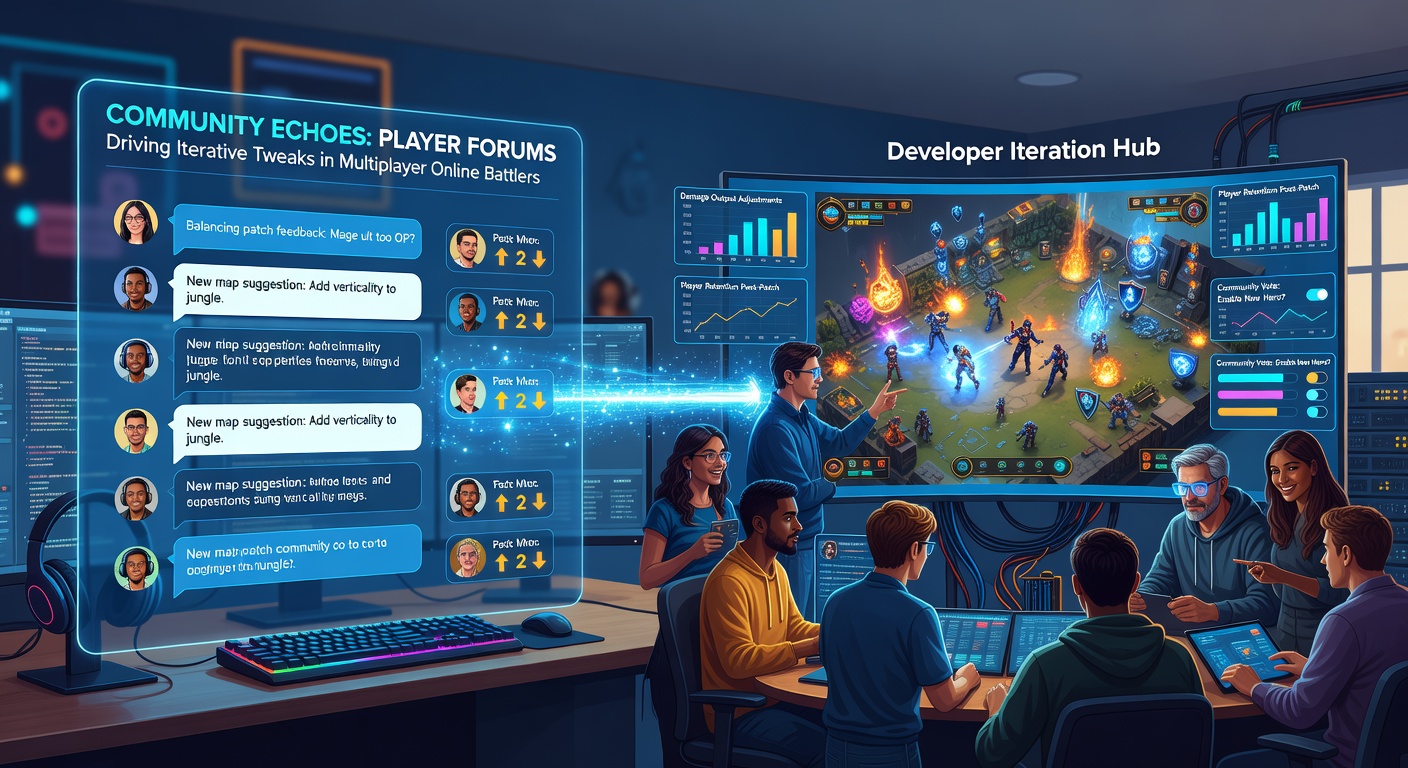
Community Echoes: Player Forums Driving Iterative Tweaks in Multiplayer Online Battlers
Player forums have become central hubs where communities dissect gameplay mechanics in multiplayer online battlers, and developers often monitor these discussions to inform targeted adjustments. Games like League of Legends and Dota 2 rely on ongoing player input gathered through official boards and third-party sites, which then feeds into patch cycles that refine character abilities, map layouts, and matchmaking algorithms. Data from industry tracking shows that between 2023 and 2025, over 60 percent of balance changes in leading titles aligned with recurring themes from forum threads.
How Feedback Loops Operate in Practice
Developers at studios such as Riot Games and Valve maintain dedicated teams that scan forum posts daily, categorizing complaints about overpowered heroes or frustrating map elements. This process turns raw community sentiment into actionable tickets, while quantitative metrics from in-game telemetry help validate or refute those observations. Observers note that a single thread highlighting a mobility exploit can trigger internal reviews within days, leading to hotfixes that roll out before the next major season.
What's interesting is the way regional servers amplify specific concerns, for instance European players might focus on ping-related advantages whereas North American discussions emphasize team composition fairness. Studios aggregate this input across platforms, creating a broader picture that guides iterative tweaks without relying solely on internal testing environments.
Documented Cases Across Major Titles
Take the evolution of Overwatch, where forum outcry over certain support heroes prompted Blizzard to adjust healing outputs and ultimate charge rates in multiple 2024 updates. Similar patterns appear in Valorant, as players flagged agent abilities that dominated ranked play, and Riot responded with nerfs documented in public patch notes. Research from the Entertainment Software Association indicates these community-driven modifications have shortened the average time between identifying an imbalance and deploying a fix from six weeks to under three in several franchises.
One case involved a popular battle royale title where forum users compiled statistics on weapon spawn rates, prompting the developer to redistribute loot tables across maps. That adjustment reduced early-game frustration for newer players while preserving competitive integrity for veterans, and the changes appeared in a May 2025 content drop that referenced aggregated player reports.
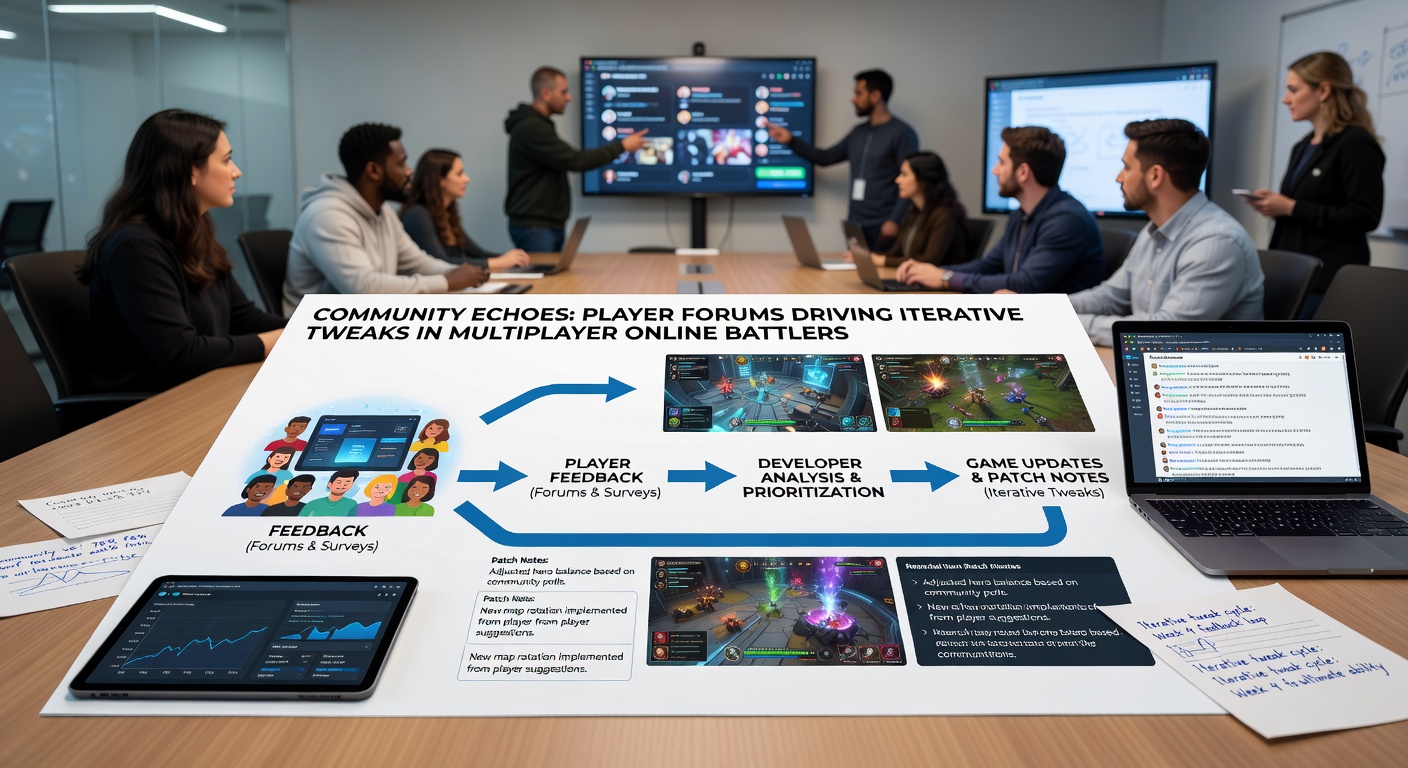
Statistical Trends and Industry Data
Figures from 2025 surveys reveal that active forum participants number in the millions across major battler communities, with peak thread volumes occurring immediately after competitive seasons conclude. Those who've studied engagement patterns find that titles incorporating forum suggestions experience higher retention rates compared to those that implement changes in isolation. A report by the Interactive Games and Entertainment Association highlights how Australian and Asian server feedback has influenced global patches, demonstrating the geographic spread of influence beyond traditional Western markets.
By May 2026, several studios had begun publishing transparency reports that list specific forum threads tied to each balance adjustment, fostering greater trust between developers and players. This practice emerged after internal data showed reduced churn when communities felt their voices shaped outcomes directly.
Technical Tools That Bridge Forums and Development
Modern analytics platforms now integrate natural language processing to scan thousands of posts for recurring keywords, allowing small teams to prioritize high-impact issues without manual review of every comment. Yet human moderators still evaluate context, because automated systems sometimes miss nuanced strategy discussions that reveal deeper design flaws. Players often discover these connections when patch notes explicitly credit community contributions, which encourages continued participation on the forums.
Academic studies from institutions like the University of Alberta have examined how these feedback mechanisms affect long-term game health, noting that iterative tweaks based on forum consensus tend to stabilize player populations across skill brackets. The research points to measurable improvements in match fairness metrics following such updates.
Challenges and Evolving Practices
Noise remains a persistent issue, as off-topic posts and heated arguments can obscure valuable insights, so moderation policies have tightened on official boards. Studios sometimes create dedicated feedback subforums with structured templates that guide players toward constructive suggestions rather than vague complaints. This structured approach has increased the usable data yield from community channels while maintaining an open environment for discussion.
Coordinated efforts across multiple titles show that shared forum practices are becoming standard, with cross-pollination occurring when players migrate between games and bring expectations for responsive development. Those patterns continue to shape how battlers evolve in response to collective player input.
Conclusion
Community forums serve as living archives of player experience that directly inform the iterative refinement of multiplayer online battlers. Through systematic monitoring, statistical validation, and transparent reporting, developers convert forum discussions into measurable game improvements. As of May 2026, these mechanisms have become embedded in standard production pipelines across the sector, supported by both industry reports and academic analysis. The ongoing dialogue ensures that balance adjustments reflect real-world usage rather than isolated testing scenarios alone.