Cross-Region Data Centers Shape Strategy Shifts in Global Mobile Esports
Bianca Schmitz · Jul 26, 2026

Cross-Region Data Centers Shape Strategy Shifts in Global Mobile Esports
Data centers positioned across multiple continents now determine how teams in international mobile esports leagues adjust their approaches during live competitions, and the effects have grown more pronounced as leagues expanded their reach through 2025 and into July 2026. Mobile titles such as Mobile Legends: Bang Bang and PUBG Mobile rely on real-time synchronization, which means server proximity directly influences response times, skill execution, and overall coordination among players scattered across time zones.
Latency Patterns Across Server Networks
Regional data center placement creates measurable differences in round-trip times that players encounter when competing from home regions versus tournament hubs. Studies conducted by the Asia-Pacific Esports Research Institute tracked average latencies between Southeast Asian players connecting to European servers and found delays ranging from 80 to 140 milliseconds, while North American connections to the same European nodes averaged 60 to 110 milliseconds. Teams respond by altering hero selections, prioritizing champions with longer-range abilities that require less precise timing, or shifting toward defensive formations that reduce the need for split-second reactions.
League organizers have documented these adaptations in official match logs. During the 2025 Southeast Asia Championship qualifiers, several squads revised their draft priorities after preliminary tests revealed inconsistent performance when matches routed through cross-Pacific routes. Observers note that squads with access to dedicated practice environments near primary tournament servers consistently posted higher win rates in early rounds.
Adaptations in Team Coordination and Drafting
Coaches now incorporate latency simulations into weekly training schedules to prepare players for variable connection conditions. One documented case involved a Korean roster that modified its communication protocols after tests showed voice command delays exceeding 200 milliseconds when competing against South American opponents on shared infrastructure. The adjustments included pre-planned signal phrases and reduced reliance on real-time callouts during high-pressure moments.
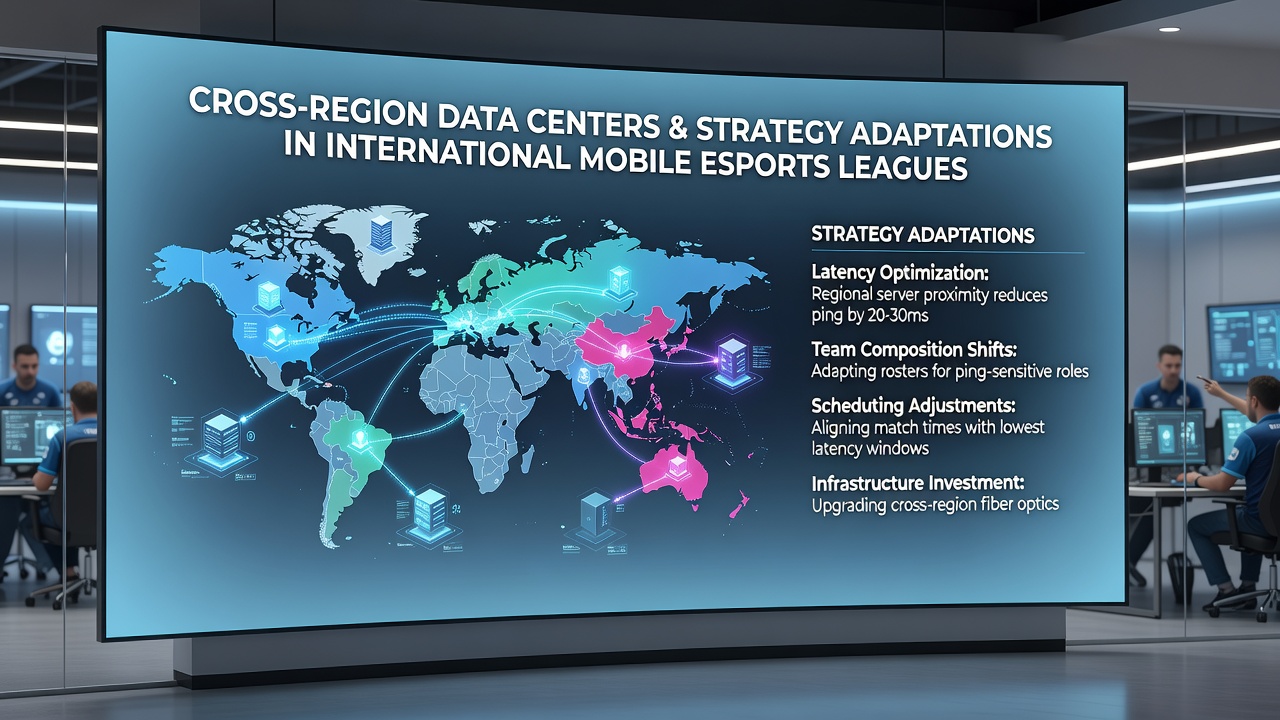
Resource allocation within matches also changes based on expected ping ranges. Data compiled by the Global Mobile Gaming Federation shows that teams facing above-average latency often reduce aggressive map rotations and instead emphasize static defensive setups that minimize exposure to timing disadvantages. These shifts appear most frequently in best-of-five series where organizers assign matches across mixed server regions.
Infrastructure Developments Through Mid-2026
Expansion projects announced in early 2026 added new nodes in Southeast Asia and Eastern Europe, altering routing paths for several major leagues. Figures released by the International Telecommunication Union indicate that these additions reduced average cross-region latency by 15 to 25 percent for participating teams, yet the improvements remain uneven depending on individual player locations and internet service providers. Leagues responded by updating their official rules to require teams to declare primary connection regions at least 48 hours before events.
Training regimens now include regular tests against simulated opponents on foreign servers, and analysts track performance metrics tied to specific data center pairings. Research from the University of Melbourne's Digital Games Lab examined match data from the 2025 World Mobile Invitational and identified clear correlations between server distance and teh frequency of late-game comebacks, with closer connections producing more consistent execution of multi-step combinations.
Rule Adjustments and Tournament Logistics
League administrators have introduced standardized testing protocols that measure player latency before each match, and results determine whether additional preparation time is granted. These measures emerged after incidents in late 2025 where unexpected routing changes through newly activated nodes disrupted several high-profile matches. Teams that maintain rosters with members spread across continents face added complexity when selecting practice partners that replicate actual tournament conditions.
Industry reports from the Entertainment Software Association highlight how sponsorship agreements now factor in data center access guarantees, with some organizations providing dedicated lines for players during international events. The pattern shows up most clearly in leagues that host simultaneous regional qualifiers feeding into a single global final.
Conclusion
Cross-region data center configurations continue to influence preparation methods, in-game tactics, and logistical planning within international mobile esports. As infrastructure evolves through 2026 and beyond, leagues and teams track these variables with increasing precision, integrating latency data into draft strategies and coordination systems. The ongoing expansion of server networks creates new variables that require repeated testing and adjustment rather than one-time solutions.