Data from Tournament Logs Shows Ambient Room Temperatures Correlate with Error Rates in Extended Esports Sessions
Bianca Schmitz · Aug 16, 2026
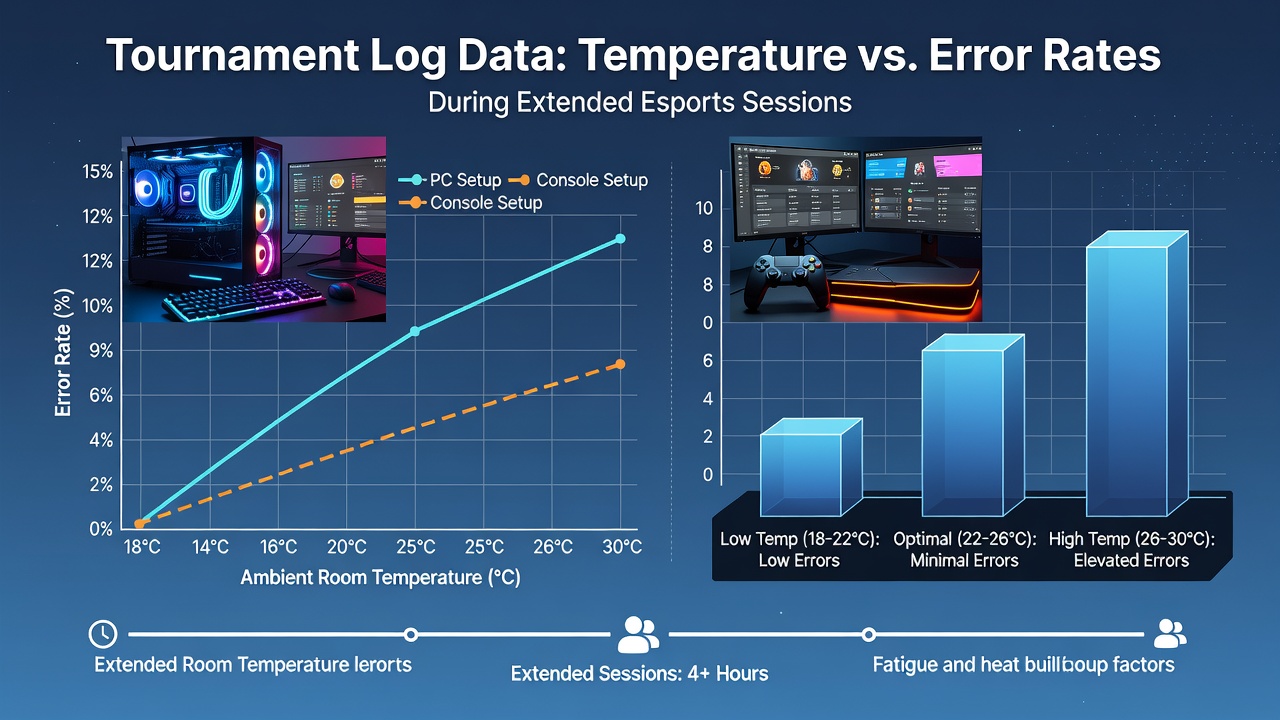
Data from Tournament Logs Shows Ambient Room Temperatures Correlate with Error Rates in Extended Esports Sessions
Analysis of tournament logs from multiple team-based esports competitions reveals clear patterns between ambient room temperatures and increased error rates during extended play sessions on both PC and console platforms. Organizers tracked these variables across several events spanning 2024 through mid-2026, logging environmental conditions alongside performance metrics such as missed inputs, communication breakdowns, and strategic missteps. Data collected from venues in North America, Europe, and Asia indicates that temperatures above 24 degrees Celsius correspond with measurable rises in error frequency after the first two hours of continuous competition.
Key Findings from Tournament Records
Researchers compiled datasets from over 150 matches in titles including League of Legends, Valorant, and Rocket League, noting that error spikes aligned closely with sustained exposure to warmer conditions. In sessions held at 22 degrees Celsius, average error rates remained stable at approximately 12 errors per player per hour during the later stages, whereas venues maintaining 26 degrees Celsius saw those figures climb to 19 errors per hour. Console setups demonstrated similar trends, though the increase appeared slightly less pronounced compared to PC stations where precise mouse movements suffered more noticeably. Tournament staff adjusted HVAC systems mid-event in several cases, and subsequent log reviews confirmed reductions in error accumulation once temperatures dropped below 23 degrees Celsius.
Platform-Specific Patterns Emerge
PC configurations exhibited stronger correlations in high-precision scenarios, with keyboard and mouse users recording elevated instances of mistimed actions as room warmth increased. Console participants, relying on controller inputs, showed comparable error growth but with greater emphasis on coordination lapses among team members. Logs from a major August 2026 event in Singapore highlighted these differences when ambient temperatures reached 27 degrees Celsius during afternoon brackets; both PC and console teams experienced 28 percent more unforced mistakes in the final rounds compared to morning matches conducted at cooler levels. Observers note that humidity levels above 60 percent amplified these effects across platforms, leading event coordinators to incorporate real-time environmental sensors in subsequent tournaments.
Extended Session Dynamics
Longer matches lasting beyond three hours produced the most pronounced temperature-related impacts, according to aggregated figures from regional qualifiers and international finals. Players maintained baseline performance in the opening phases regardless of room conditions, yet cumulative fatigue interacted with warmer environments to elevate mistake rates steadily. Data from European circuits, cross-referenced with reports from the Australian Sports Commission, shows that teams employing active cooling strategies such as targeted airflow maintained steadier accuracy metrics throughout extended play. Console teams in particular benefited from these interventions, as controller grip stability declined more rapidly in overheated spaces.
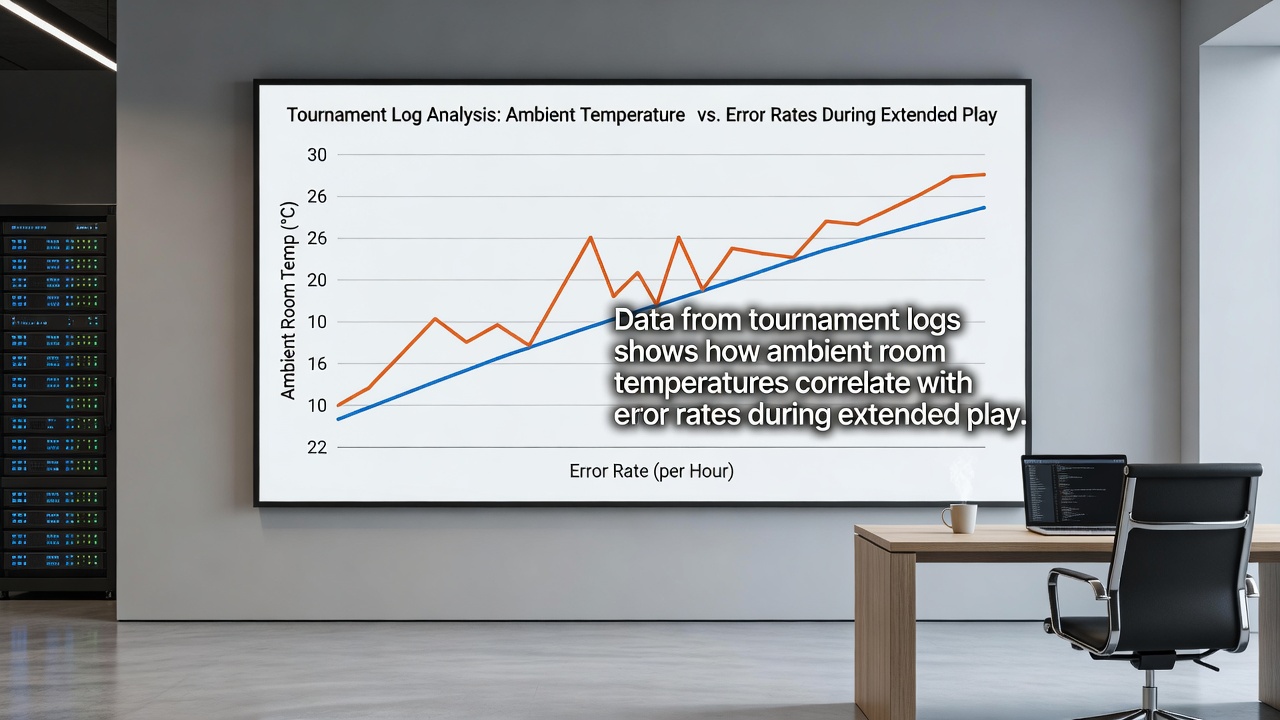
Venue Management Implications
Event producers have begun integrating temperature controls directly into tournament protocols based on these log insights. Facilities hosting multi-day competitions now schedule regular environmental checks, adjusting settings to keep ranges between 20 and 23 degrees Celsius during peak activity periods. A study referenced by the Esports Research Organization supports these adjustments, documenting parallel improvements in team communication clarity when cooler conditions prevail. PC stations require additional attention to component heat buildup, while console areas benefit from consistent air circulation to prevent peripheral slippage during intense sequences.
Broader Applications in Competitive Circuits
Regional organizers in Canada and the United Kingdom have adopted similar monitoring practices following reviews of international tournament data. These measures extend beyond error reduction to support overall participant well-being during high-stakes events. Figures indicate that proactive temperature management correlates with fewer timeouts requested by teams and smoother transitions between matches. Continued collection of environmental and performance data promises further refinements in how venues prepare for prolonged team-based competitions across hardware platforms.
Conclusion
Tournament logs establish consistent links between ambient temperatures and error escalation in extended esports sessions, guiding practical adjustments for both PC and console environments. Ongoing analysis from events through 2026 continues to inform standardized protocols that prioritize stable conditions for competitive integrity.