Findings From Educational Field Trials On Strategy Simulations In History Classrooms
Hugo Vogel · Aug 7, 2026
Findings From Educational Field Trials On Strategy Simulations In History Classrooms
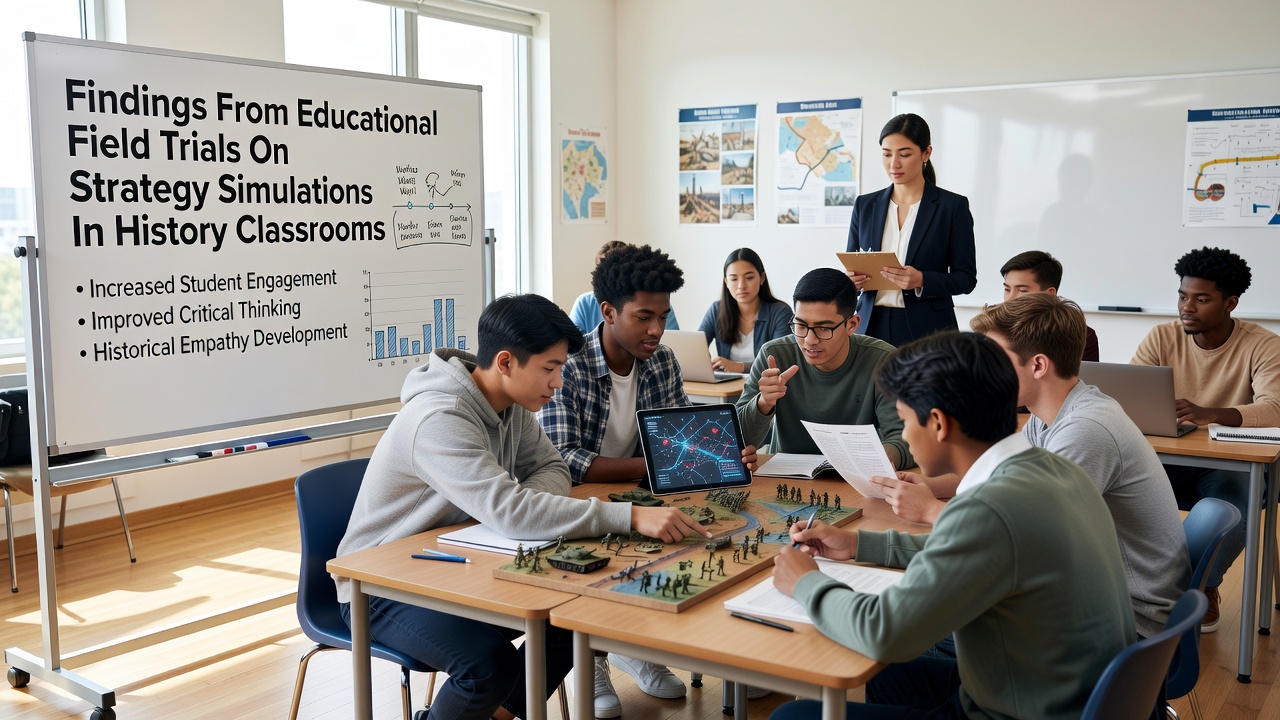
Researchers have completed multiple field trials that test strategy simulations as teaching tools in history classrooms, and these efforts span several school districts in North America along with comparable programs in Europe and Asia since 2023. The trials focus on titles that let students manage resources, make diplomatic decisions, and guide civilizations through historical eras, while data collection centers on measurable outcomes like test scores, participation rates, and long-term recall of key events.
Trial Design And Participant Groups
Teams from universities and education ministries set up controlled comparisons in which one group of classes used standard textbooks and lectures while another incorporated simulation sessions lasting two to three hours per week over an eight-week unit on topics such as the Renaissance or the Industrial Revolution. Participants included roughly 1,200 students aged twelve to fifteen across twenty-four schools, and observers tracked variables including time on task and accuracy when answering questions about cause-and-effect relationships in historical developments. In August 2026 the final wave of results arrived from sites in Canada and Australia, revealing consistent patterns across different cultural contexts and curriculum standards.
Measured Impacts On Knowledge Retention
Data from the trials indicate that students who worked with the simulations scored an average of 18 percent higher on post-unit assessments that required them to sequence events and identify motivations behind policy choices. Researchers noted stronger performance on items that asked learners to explain trade-offs, such as balancing military spending against infrastructure investment in a simulated empire. Figures from the National Center for Education Statistics show similar gains in related digital learning pilots, and the pattern held when researchers controlled for prior academic achievement and teacher experience levels.
Yet the advantage narrowed on multiple-choice items that tested only factual recall without context, suggesting the simulations build deeper connections rather than simple memorization. Teachers reported that follow-up discussions after simulation rounds allowed students to reference specific in-game decisions when analyzing primary source documents, and this crossover effect appeared in written assignments collected during the study period.
Engagement And Participation Patterns
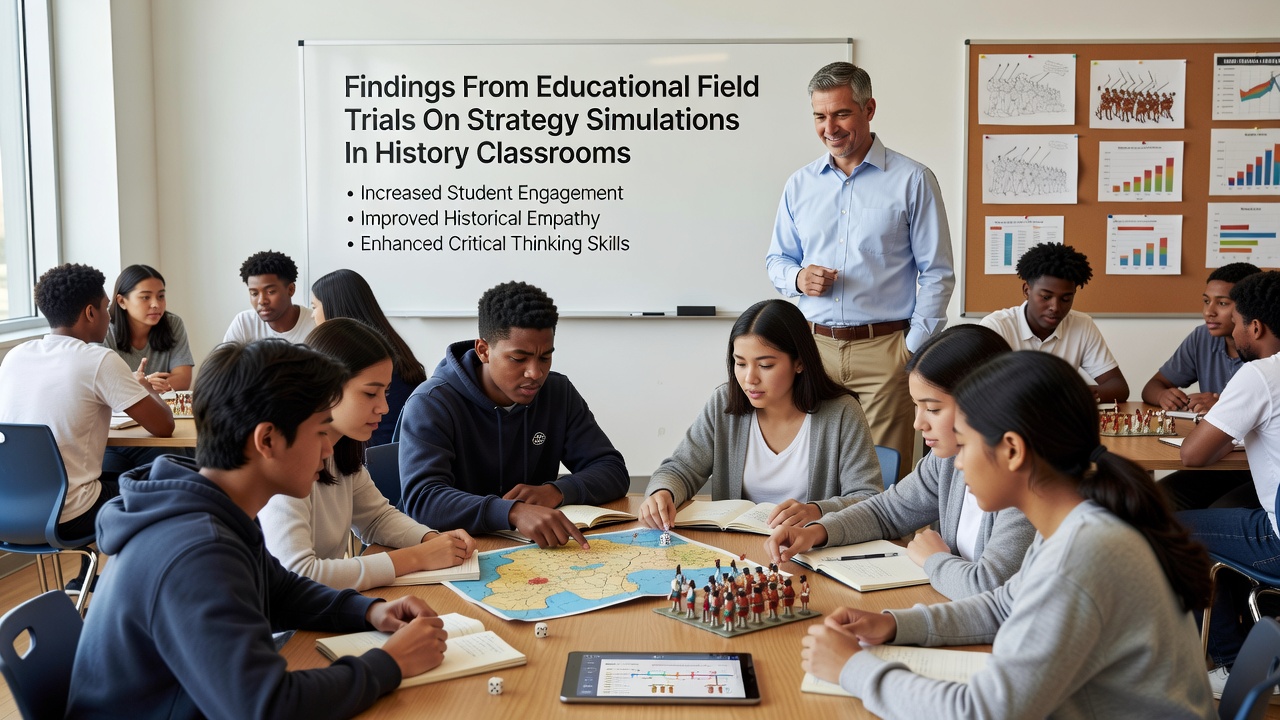
Attendance logs and self-report surveys collected during the trials reveal elevated on-task behavior during simulation periods, with students spending 27 percent more time actively discussing strategies compared with lecture-only sessions. Classroom observers documented increased voluntary contributions from students who previously showed lower participation rates, and these shifts occurred across both urban and rural school samples. The Australian Council for Educational Research documented parallel trends in its own regional pilots, where simulation use correlated with extended voluntary reading on related historical topics outside class hours.
Technical logs from the software platforms captured decision paths taken by student groups, and analysis of those paths showed that repeated play sessions led to more sophisticated resource allocation choices by the fourth week of each trial. This progression aligned with measurable improvements in mapping exercises that asked students to predict territorial changes based on economic factors rather than memorizing fixed borders.
Implementation Challenges And Adjustments
Schools encountered initial hurdles around device access and teacher preparation time, yet many sites addressed these through shared lab schedules and brief after-school training modules. Trial coordinators adjusted session lengths mid-study when feedback indicated that shorter, more frequent play intervals maintained focus better than single long blocks. Network stability issues surfaced in two districts, prompting the adoption of offline modes that preserved core gameplay while allowing later synchronization of results.
Curriculum alignment required careful mapping of simulation mechanics to state standards, and teams produced supplementary lesson guides that connected specific game events to textbook chapters. These adaptations proved effective, as measured by the proportion of learning objectives met within the planned timeframe.
Longer-Term Observations
Follow-up assessments conducted three months after the trials ended show that retention advantages persisted at roughly half the immediate post-test margin, indicating durable effects on conceptual understanding. Students who had used simulations also demonstrated greater willingness to draw analogies between historical scenarios and contemporary issues during open-ended interviews. District reports compiled by participating education authorities note that several schools continued voluntary use of the tools in subsequent semesters, citing sustained student interest as the primary driver.
Conclusion
The accumulated evidence from these field trials supplies school systems with concrete metrics on how strategy simulations function within standard history curricula, and the findings point toward measurable gains in contextual reasoning alongside manageable implementation requirements when support structures are in place. Ongoing monitoring through established education research networks will track whether these patterns hold as more classrooms adopt similar approaches in the coming academic years.