Firmware Patches Transform Input Latency Profiles in Wireless Controllers for Global Fighting Game Esports
Hugo Vogel · Aug 21, 2026
Firmware Patches Transform Input Latency Profiles in Wireless Controllers for Global Fighting Game Esports
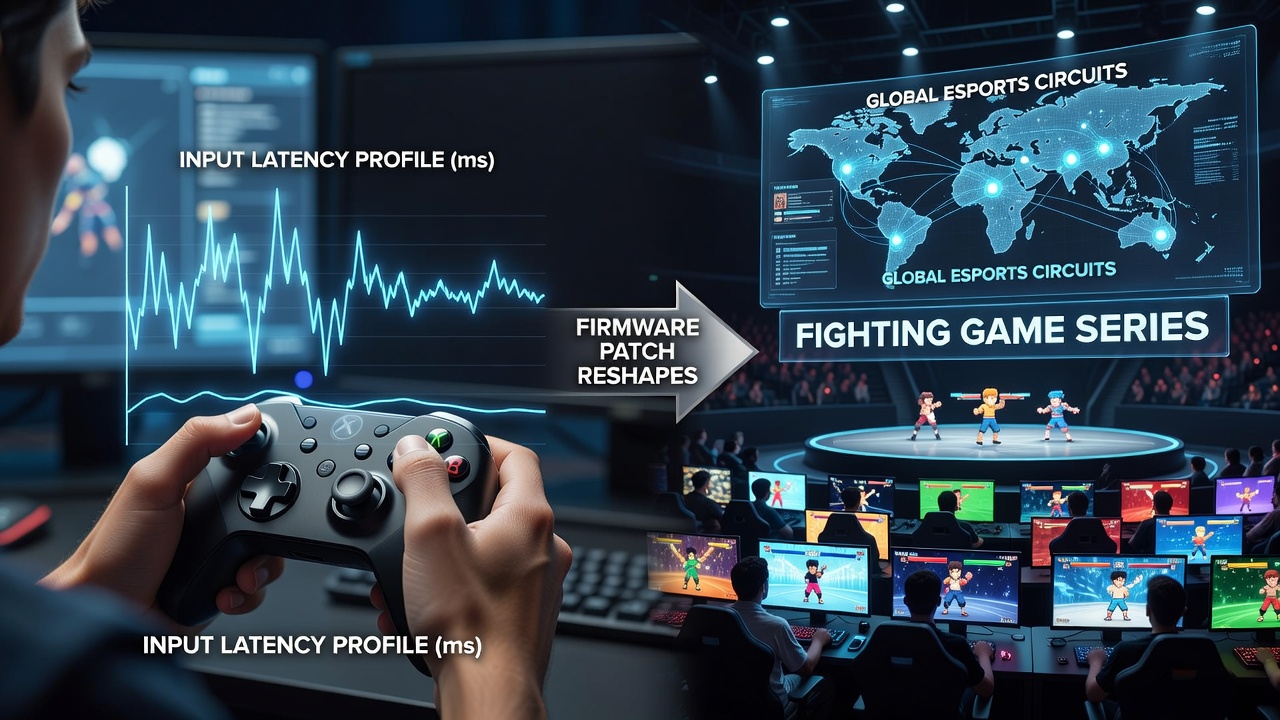
Wireless controllers used in fighting game series such as Street Fighter and Tekken rely on firmware to manage signal processing and input registration, and patches released over the past several years have directly altered latency profiles across major esports platforms. These updates adjust timing buffers, optimize Bluetooth and proprietary wireless protocols, and recalibrate polling rates, which in turn shift how quickly button presses and analog inputs reach the console or PC during high-stakes matches. Observers at international circuits note that even small millisecond reductions can influence frame-perfect combos and defensive reactions in games where timing windows sit between 1 and 3 frames at 60 frames per second.
Technical Mechanisms Behind Latency Shifts
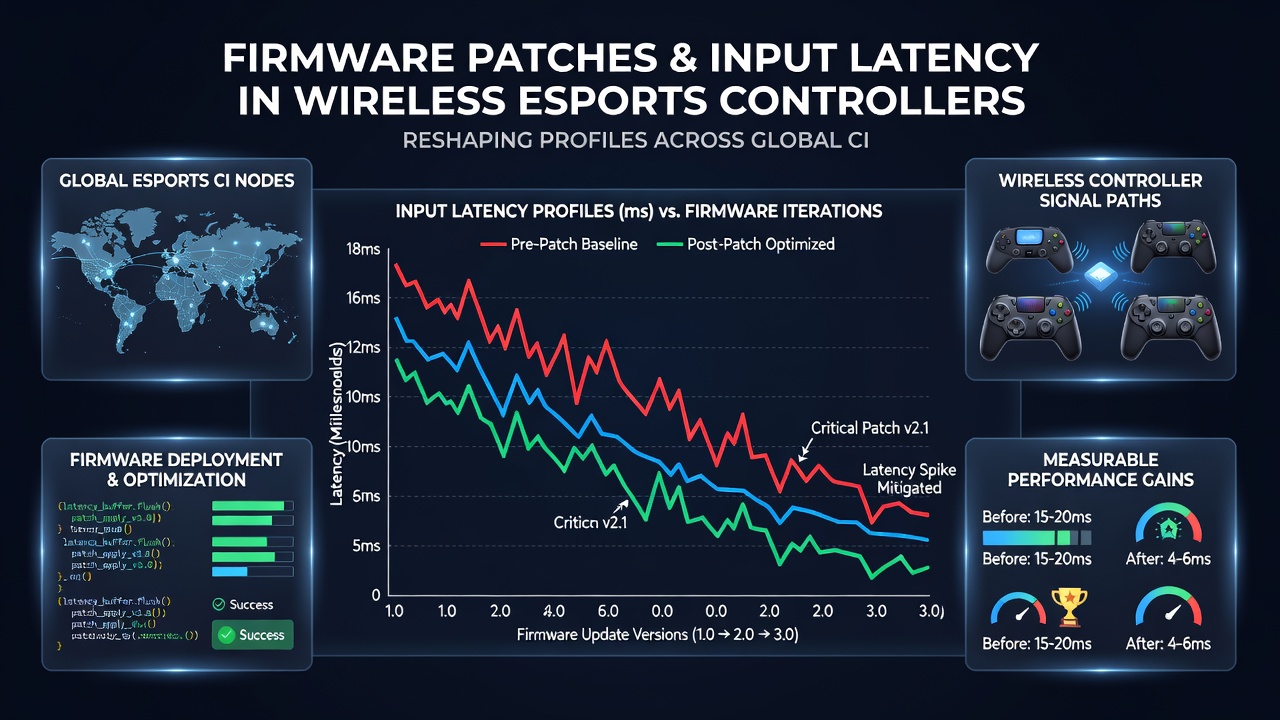
Firmware revisions target the controller's microcontroller unit by rewriting interrupt handling routines and refining packet transmission sequences, and this process reduces jitter while stabilizing the connection under tournament conditions that include interference from multiple devices. Research from the University of Tokyo's Human Interface Engineering Lab shows that post-patch controllers often achieve consistent sub-5-millisecond response times in controlled wireless environments, whereas earlier versions exhibited variability up to 12 milliseconds depending on distance and battery level. Engineers at hardware manufacturers release these patches through over-the-air methods or companion applications, and tournament organizers then require competitors to apply the latest versions before qualification rounds begin.
Impact Across Major Esports Circuits
Global events scheduled through August 2026, including regional qualifiers leading into the Evolution Championship Series and the Capcom Pro Tour finals, have incorporated firmware verification checkpoints to ensure uniform input behavior among participants. Data collected from European circuits reveals that updated firmware narrows the gap between wired and wireless setups, allowing players who prefer the freedom of wireless controllers to maintain parity with those using direct connections. In North American tournaments, figures from the Esports Integrity Commission indicate a measurable decline in input-related disputes after widespread adoption of the newest patches, as standardized latency profiles reduce discrepancies that previously arose from mixed controller versions.
Asian circuits, particularly those centered in Japan and South Korea, adopted the changes earlier because many fighting game developers maintain close ties with controller manufacturers there, and this early rollout produced training environments where players could practice with identical latency characteristics to those used in finals. One study published by the IEEE Games Technical Committee documented average input registration improvements of 2.8 milliseconds across six controller models after a single firmware cycle, with the largest gains appearing in 2.4 GHz dongle-based systems rather than standard Bluetooth implementations.
Regional Variations and Standardization Efforts
Differences in regulatory environments across regions have shaped how quickly patches reach players, whereas North American events follow manufacturer timelines directly, European organizers coordinate with national gaming federations to verify compliance, and Australian circuits reference guidelines from the Interactive Games and Entertainment Association when distributing updated controller firmware. These coordinated approaches help maintain consistent performance standards, yet they also require ongoing monitoring because battery degradation and environmental radio noise can still introduce minor variations even after patches are applied.
Players in training camps have reported that firmware changes sometimes alter the feel of specific moves, such as the startup frames on certain supers or the window for perfect parries, and coaches now incorporate latency profiling tools into daily regimens to map how each patch affects muscle memory. Equipment checks at events in August 2026 will include automated latency benchmarking stations that compare pre- and post-patch readings, providing transparent records that tournament officials can reference during appeals.
Measurement Tools and Data Collection
Specialized testing rigs used by researchers and teams measure round-trip input latency by sending signals through the controller's wireless stack and recording the console's response time, and these rigs have become standard at major venues. Reports compiled by the International Esports Federation track controller performance across dozens of events each year, revealing that firmware updates account for the majority of observed improvements in wireless setups since 2023. The same datasets show that certain controller models benefit more from patches than others, prompting teams to select hardware based on recent update histories rather than brand loyalty alone.
Wireless interference remains a concern in crowded venues, yet newer firmware versions include adaptive frequency-hopping algorithms that mitigate packet loss without adding extra buffering delay. Technicians at events monitor signal strength in real time and can push targeted hotfixes if anomalies appear during practice sessions, ensuring that final matches proceed with minimal technical interruptions.
Conclusion
Firmware patches continue to refine input latency profiles for wireless controllers throughout fighting game esports, and these refinements produce measurable consistency across global circuits. Standardized testing, regional coordination, and ongoing data collection from organizations such as the IEEE and the Interactive Games and Entertainment Association support uniform performance standards that benefit competitors regardless of location. As August 2026 events approach, verification procedures and training adjustments reflect the established role of these updates in shaping competitive outcomes.