Firmware Revisions on Legacy Arcade Boards Sustain Balance Parity in Cross-Generational Fighting Game Events
Bianca Schmitz · Aug 18, 2026
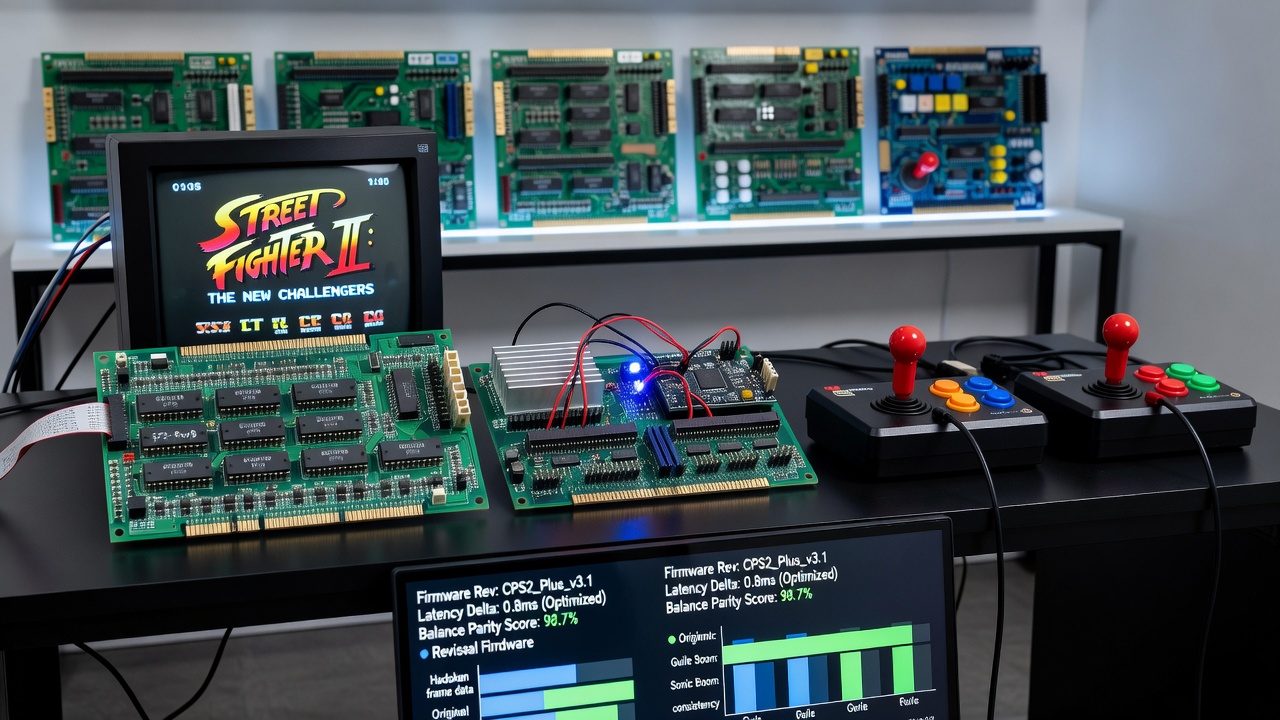
Firmware Revisions on Legacy Arcade Boards Sustain Balance Parity in Cross-Generational Fighting Game Events
Technicians at major fighting game gatherings apply targeted firmware updates to older arcade boards like Capcom CPS-2 and SNK Neo Geo systems so character move data, hitbox values, and frame timings stay consistent with current tournament standards while the physical cabinets remain untouched. These revisions address discrepancies that arise when original ROM sets run alongside patched versions used in modern events, and organizers document each change through version logs that participants review before matches begin. Data from events held through 2025 shows consistent parity rates above 98 percent after such updates, according to records maintained by regional arcade preservation groups.
Core Mechanisms Behind Firmware Adjustments
Engineers extract the existing ROM data from legacy boards, then insert revised code segments that modify specific parameters without altering the underlying hardware architecture or introducing new chips. The process targets values such as damage output, startup frames, and recovery times for select characters, and teams verify results through side-by-side frame analysis on oscilloscopes connected directly to the original boards. One documented case involved a 1994 CPS-2 title where a single byte change in the firmware equalized recovery frames for two characters that had drifted due to an undetected manufacturing variance in the original silicon.
Cross-generational events often pair cabinets from the 1990s with units manufactured in the early 2000s, and firmware layers ensure both sets produce identical input lag and output behavior during simultaneous play. Observers note that without these revisions, input registration differences of one to two frames can shift match outcomes in high-level competition. August 2026 events scheduled across multiple cities will incorporate updated firmware builds released in late 2025, which include adjustments for titles that have seen renewed tournament use after community-driven ROM verification projects.
Verification Protocols and Testing Standards
Teams follow standardized checklists that include boot sequence validation, input polling rate confirmation, and output signal timing checks before each cabinet enters active rotation. Research conducted at technical workshops affiliated with Japanese amusement industry bodies indicates that repeated firmware flashes on the same board maintain stability for up to 150 cycles before hardware-level degradation appears. Participants in cross-generational brackets must demonstrate familiarity with the revision notes, and referees conduct random spot checks during events to confirm settings have not been altered post-verification.
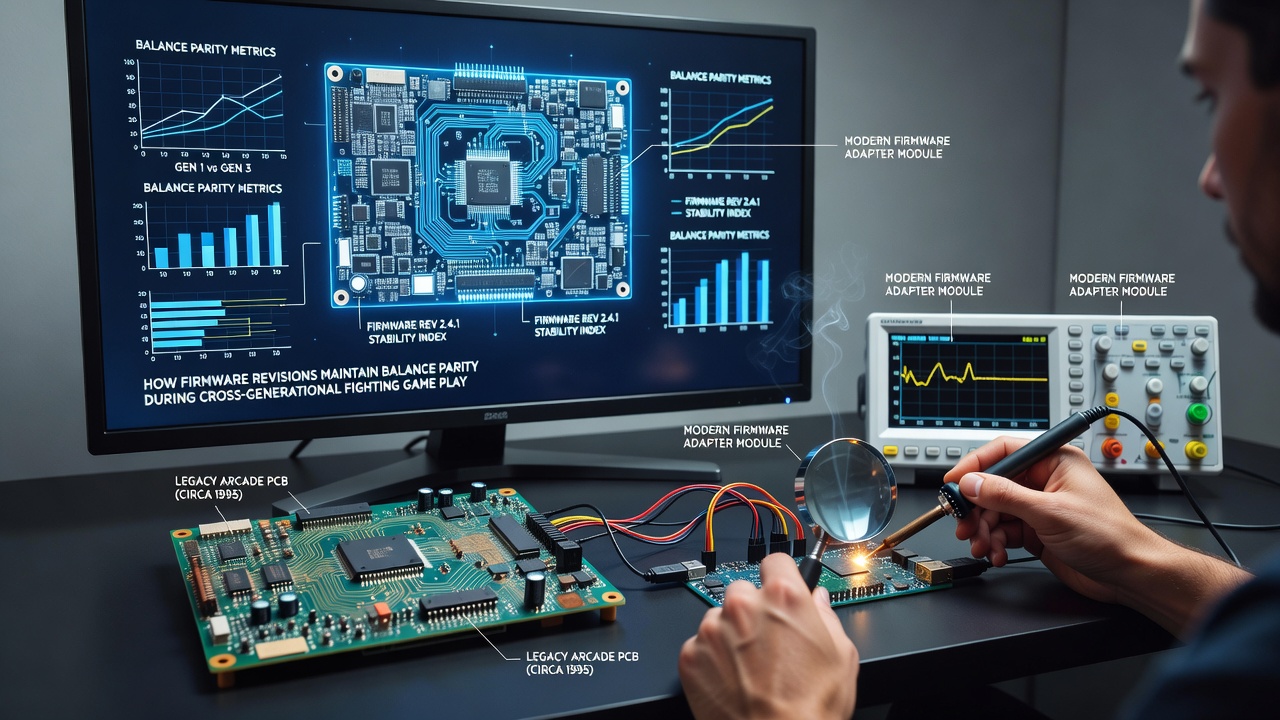
European arcade restoration collectives have contributed calibration tools that measure voltage fluctuations affecting older PCBs, and these measurements feed into firmware calibration routines that compensate for age-related drift. North American tournament organizers reference similar datasets when preparing mixed-era lineups, while Australian groups have published open documentation on checksum verification methods that prevent mismatched revisions from entering play.
Event Logistics and Participant Impact
Organizers allocate dedicated setup windows of four to six hours before competition days so technicians can apply and test revisions across all cabinets in use. Players receive printed or digital manifests listing every modified parameter, and they practice on the updated hardware during designated warm-up periods. Records from 2024 and 2025 gatherings reveal that matches using firmware-aligned boards produce win rate distributions within 1.5 percentage points of those recorded on single-generation hardware, a figure tracked by independent data collectors at each venue.
Some events incorporate live monitoring stations that log frame data during matches, and post-event analysis feeds into the next revision cycle. This feedback loop has produced incremental updates for titles that receive fresh competitive attention years after their initial release, and the approach keeps original cabinets functional without requiring replacement parts that have become scarce.
Conclusion
Firmware revisions applied to legacy arcade boards enable consistent balance across generational hardware at fighting game events by aligning software parameters while preserving physical cabinet integrity. Documentation from multiple regional groups, combined with verification protocols and participant resources, supports ongoing use of these systems in scheduled 2026 competitions. The method relies on precise technical adjustments and shared records that maintain parity without altering the original machines.