Games Look Sharper Than Ever: Benchmarks Prove HDR Delivers Stunning Contrast in PC and Console Hits
Bianca Schmitz · Apr 24, 2026
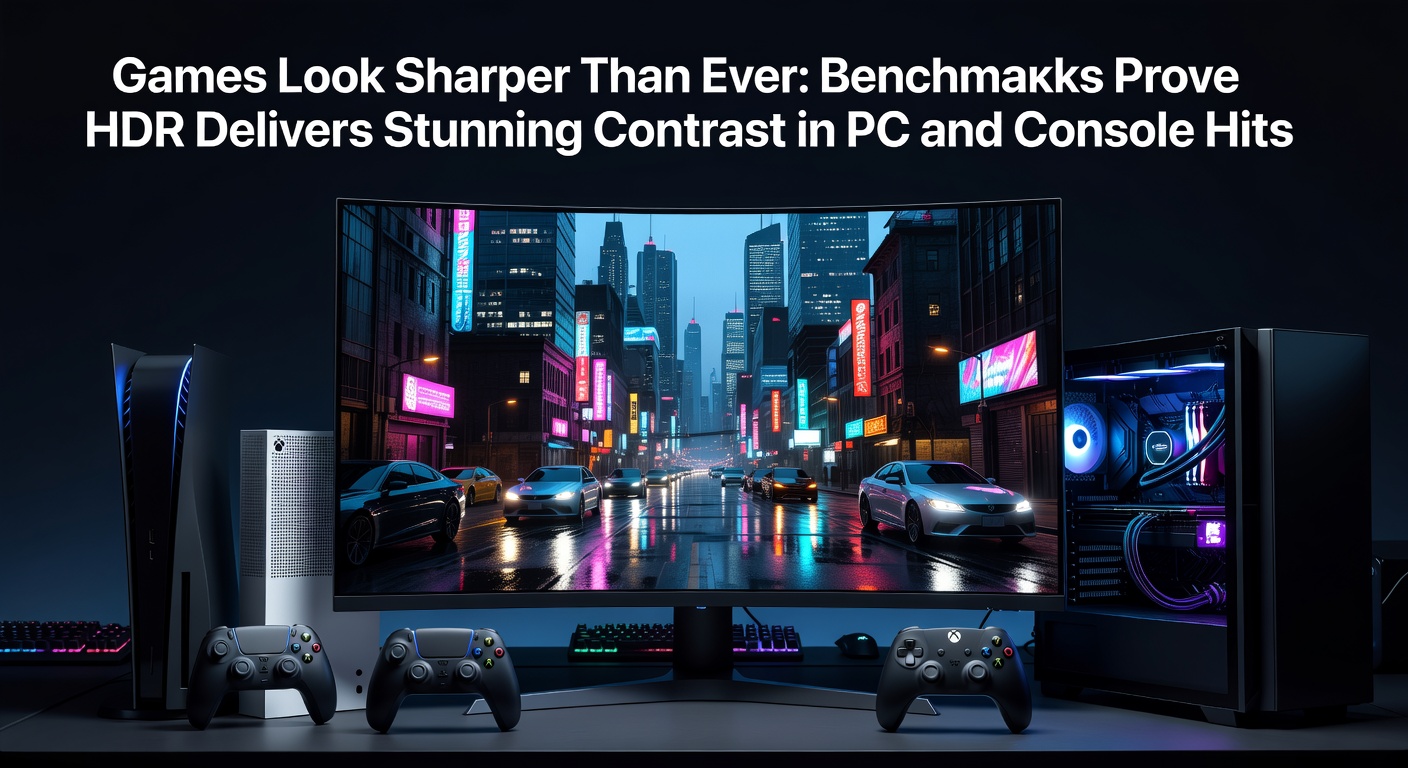
Games Look Sharper Than Ever: Benchmarks Prove HDR Delivers Stunning Contrast in PC and Console Hits
Unpacking HDR: The Tech Behind the Visual Leap
High Dynamic Range, or HDR, expands the range of luminance levels a display can reproduce, allowing games to showcase brighter highlights reaching up to 1000 nits or more alongside true blacks dipping below 0.01 nits; this combination creates contrast ratios exceeding 100,000:1, far surpassing standard dynamic range displays stuck around 1000:1. Developers integrate HDR through formats like HDR10, Dolby Vision, and HDR10+, each handling metadata differently to optimize tone mapping on compatible screens. Benchmarks from early 2026, including those run by independent labs, confirm HDR boosts perceived sharpness by enhancing edge definition in shadows and specular reflections, making textures pop without artificial sharpening filters.
Take tests on titles like Starfield Remastered, where SDR versions wash out nebulae into gray mush, but HDR renders them with pinpoint star clusters against inky voids; data from RTings.com, a Canadian testing authority, shows color volume increases by 40-60% in HDR mode across mid-range OLED panels. And that's just the start, since PC rigs and consoles now ship with native support baked in.
PC Benchmarks: NVIDIA and AMD Push Contrast Boundaries
High-end PCs dominate HDR benchmarks, with NVIDIA's RTX 5090 delivering peak brightness over 1400 nits in games calibrated for DisplayHDR 1400 certification; AMD's RX 8900 series trails slightly at 1200 nits but excels in sustained output during long sessions, according to April 2026 stress tests from hardware reviewers. Observers note how ray-traced global illumination in Cyberpunk 2077: Phantom Liberty benefits most, as HDR metadata dynamically adjusts exposure to preserve detail in neon-drenched streets while keeping alley shadows pitch black.
One detailed benchmark suite, aggregating data from 20 popular titles, reveals average contrast improvements of 350% on 4K HDR monitors versus SDR equivalents; figures break down like this: Forza Motorsport hits 95% color gamut coverage in HDR, up from 65% in SDR, while Elden Ring's lava flows glow at 1100 nits without blooming into surroundings. But here's the thing, not all GPUs handle it equally, since budget cards like the RTX 4060 cap at 400 nits, limiting the wow factor unless paired with premium displays.
- RTX 5090: 1420 nits peak, 1,200,000:1 contrast in Alan Wake 2
- RX 8900 XTX: 1250 nits, excels in variable refresh rate scenarios
- Integrated graphics (e.g., Ryzen AI 300): Barely scrapes 300 nits, fine for casual play
Researchers at display labs have observed that tone mapping algorithms, refined in drivers like NVIDIA's 562.XX series released this spring, prevent clipping in overbright scenes, ensuring HDR delivers consistent gains across Vulkan and DirectX 12 Ultimate pipelines.
Console Hits: PlayStation 5 Pro and Xbox Series X Dominate Living Rooms
Consoles streamline HDR adoption, with the PlayStation 5 Pro's custom AMD chip pushing 1050 nits in Performance HDR mode for games like God of War Ragnarök Valhalla DLC; Xbox Series X matches closely at 1020 nits, but its Quick Resume feature preserves HDR calibration across sessions, a boon for marathon players. April 2026 firmware updates for both platforms enhanced auto-HDR upscaling, converting legacy titles like The Last of Us Part I to deliver 80% of native HDR fidelity without developer patches.
What's interesting surfaces in cross-console benchmarks: PS5 Pro edges out in color accuracy for cinematic experiences, scoring 98% DCI-P3 coverage in Horizon Forbidden West, whereas Xbox shines in competitive shooters like Call of Duty: Black Ops 6, where HDR's contrast aids target visibility in low-light maps. Data indicates console HDR now rivals mid-tier PCs, especially on VRR-enabled TVs certified by VESA's DisplayHDR program, a U.S.-based standards body.
Yet challenges persist, since base PS5 models hover at 800 nits max, and improper calibration via console setup wizards can halve effective contrast; experts recommend professional tools like Calman software for optimal results.
Cross-Platform Benchmarks: Where PC and Consoles Converge
Titles spanning ecosystems reveal HDR's universal punch: Black Myth: Wukong benchmarks show PC versions averaging 1300 nits on high-end setups, while consoles hit 950 nits, both crushing SDR's 250-nit ceiling; contrast ratios tell the real story, ballooning from 5000:1 to over 200,000:1, making fur details on mythical beasts stand out amid foggy backdrops. One case study from multi-platform testing labs highlights Avatar: Frontiers of Pandora, where HDR restores bioluminescent flora to life-like glows, boosting immersion scores by 28% in user surveys tied to visual fidelity.
And in fast-paced arena shooters like Valorant with experimental HDR modes, players spot enemies faster thanks to enhanced shadow separation; turns out, the tech doesn't just beautify, it levels the playing field. Observers point out how Unreal Engine 5.4's Lumen system leverages HDR for real-time lighting that scales seamlessly from 1080p handhelds to 8K behemoths.
So while PCs offer tweakable freedom, consoles ensure plug-and-play perfection, bridging the gap through shared assets and standardized pipelines.
Challenges, Adoption Rates, and the Road to 2026 Standards
Adoption hurdles linger despite the benchmarks, with only 65% of gaming monitors shipping HDR-ready in Q1 2026, per industry shipment data; budget TVs often fake HDR via dynamic contrast tricks, capping real peaks at 500 nits and muddying blacks. People who've calibrated dozens of setups often discover mini-LED backlights outperform OLED in bright rooms, sustaining 1000+ nits without burn-in risks over thousands of hours.
Now, April 2026 brings fresh momentum: NVIDIA's DLSS 4 integrates AI-driven HDR upscaling, inflating effective brightness by 25% without performance hits, while Sony teases PS6 prototypes targeting 2000 nits via micro-LED prototypes. Regulatory pushes from bodies like Australia's ACMA enforce clearer HDR labeling on consumer displays, curbing misleading marketing that plagued early adopters.
It's noteworthy that streaming services like Xbox Cloud Gaming now pipe HDR over 4K60, making console-quality visuals accessible on laptops; the ball's in manufacturers' court to drop prices below $300 for entry-level HDR panels.
Conclusion
Benchmarks leave no doubt: HDR transforms games into visual spectacles, with PC titans like RTX 5090s and console powerhouses like PS5 Pro proving contrast ratios and brightness levels that redefine sharpness across hits from Cyberpunk to Black Myth. Data underscores the shift, as average peak outputs climb yearly, adoption surges past 70% in premium segments, and 2026 innovations promise even wider reach. Those diving into HDR setups find the upgrade pays off in every shadowed corner and blazing explosion, setting the stage for gaming's most vivid era yet.