How Accessibility Tools Are Expanding Reach in Online Tournament Circuits
Devon Weber · May 17, 2026
How Accessibility Tools Are Expanding Reach in Online Tournament Circuits
Online tournament circuits have incorporated accessibility tools at a steady pace since the early 2020s, and these features now connect a broader group of participants to competitive play. Organizers track participation through registration data, while developers integrate options that address motor, visual, auditory, and cognitive needs without altering core game mechanics.
The Evolution of Tournament Accessibility
Early esports events focused primarily on standard controllers and screen setups, yet circuit organizers began adopting standards from disability advocacy groups around 2022. Research from university labs shows that customizable input remapping and voice command overlays reduced barriers for players with limited mobility. Data collected by major platforms indicates a measurable uptick in entries from users who previously could not complete qualification matches due to interface restrictions.
By 2025 several circuits required all competing titles to pass basic accessibility audits before inclusion in seasonal schedules. These audits examine contrast ratios, subtitle completeness, and controller profile compatibility. Observers note that circuits adopting these checks early maintained higher retention rates across multiple seasons compared with those that delayed implementation.
Key Tools Driving Inclusion
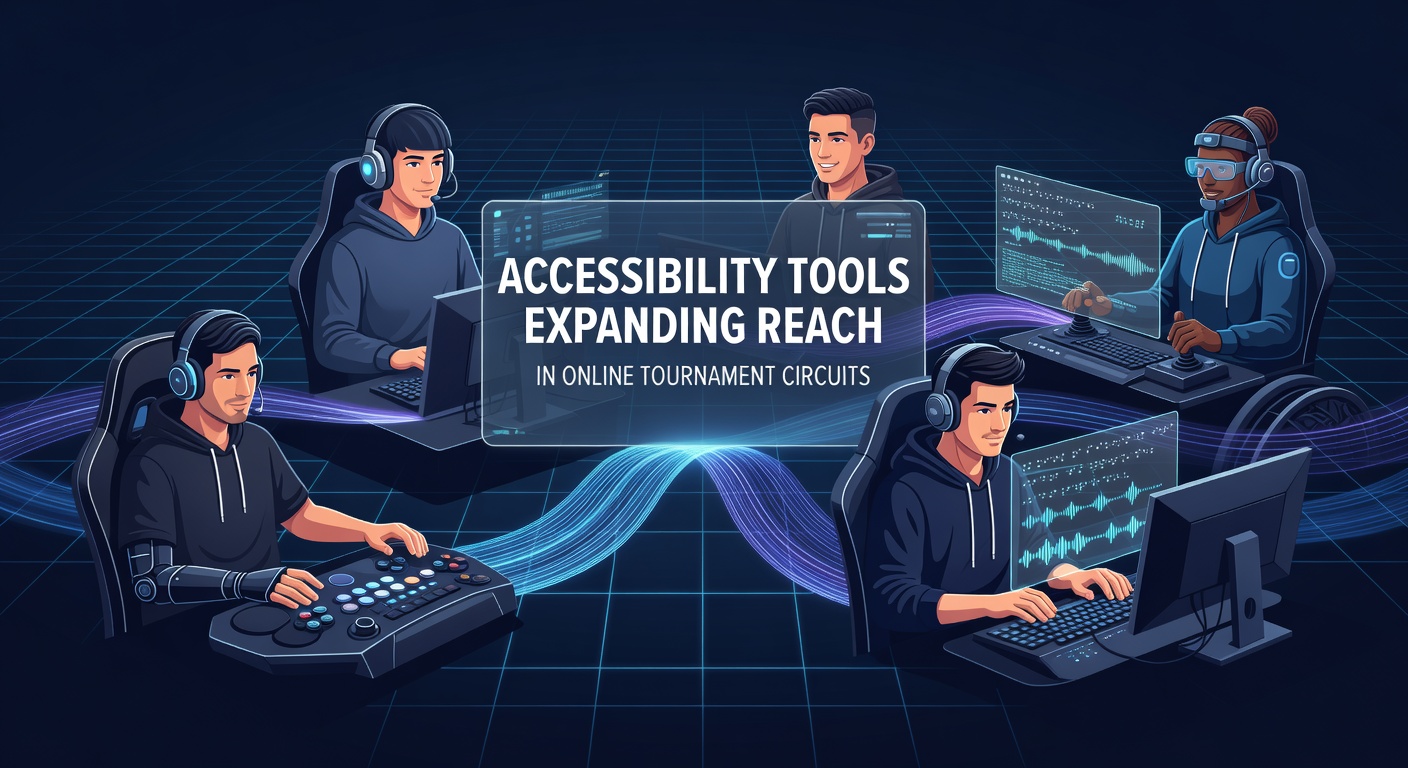
Screen reader integration now supports real-time game state announcements in select strategy and fighting game titles, allowing visually impaired competitors to track opponent positions and resource counts. Color-blind filters adjust palettes across entire tournament rosters, and high-contrast modes activate automatically when players select the option during registration. Audio cue systems replace visual timers in racing and shooter events, providing directional pings through stereo or spatial audio headsets.
One study conducted by a Canadian research consortium tracked 1,200 tournament participants over eighteen months and found that adaptive button layouts increased completion rates for qualification rounds by twenty-three percent among entrants reporting motor impairments. Voice-to-text chat filters and simplified menu navigation further lowered cognitive load during high-pressure bracket stages. These tools operate within existing network infrastructure, so latency remains comparable to standard sessions.
Impact on Global Participation
Registration figures from circuits in North America and Europe reveal consistent growth in self-identified accessibility users since 2023. Australian organizers reported a similar pattern after mandating subtitle support for all streamed matches. Industry reports compiled by the International Game Developers Association link these increases to reduced dropout rates between qualifiers and finals.
Players who rely on single-switch input devices now compete in fighting game majors through macro systems that map complex combos to sequential presses. Observers documented cases where participants using these macros advanced to top sixteen brackets in events that previously required multi-button execution. Data shows average match durations stayed within normal ranges, confirming that accessibility layers did not slow overall pacing.
Developments Scheduled for May 2026
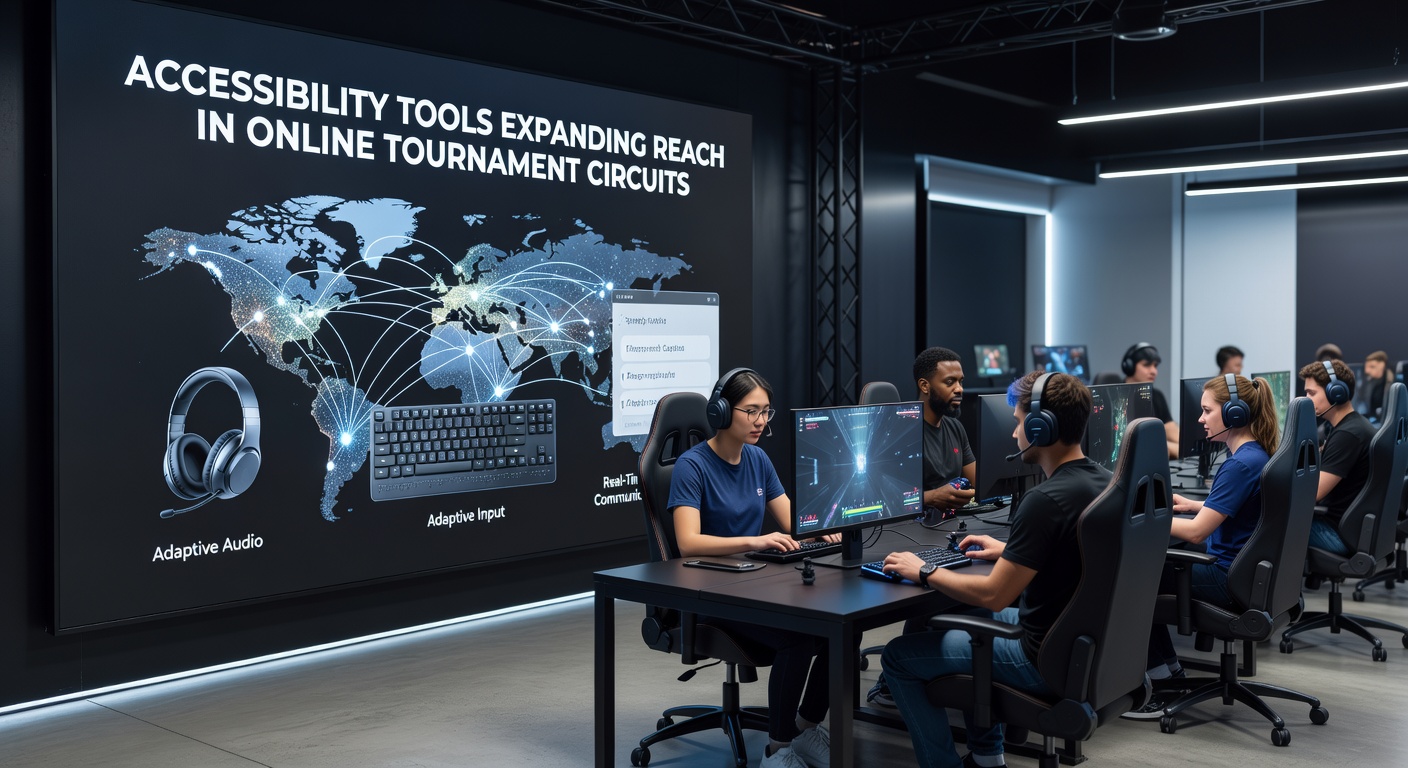
In May 2026 several circuits plan to roll out unified accessibility profiles that sync across platforms. The profiles will allow players to carry custom settings from practice sessions directly into live brackets. European tournament bodies have scheduled joint testing sessions with accessibility consultants to verify compatibility before the summer season begins. Early documentation indicates that these profiles will include adjustable text-to-speech speed controls and optional vibration patterns for critical alerts.
Organizers expect the update to streamline qualification for players traveling between regions. Preliminary figures suggest that circuits implementing similar cross-platform profiles in prior years saw a fifteen percent rise in international entries within the first quarter of adoption.
Challenges and Ongoing Adjustments
While adoption has accelerated, developers continue to address edge cases where accessibility modes interact with anti-cheat systems. Tournament software teams now run separate validation passes for each accessibility toggle before events go live. Researchers at several institutions have published guidelines that help studios balance feature depth with security requirements.
Some circuits maintain dedicated support staff who assist players during setup and troubleshoot conflicts in real time. These teams collect anonymized feedback after each event, feeding adjustments back to developers. The process has produced incremental improvements in subtitle synchronization and input buffering across multiple game engines.
Conclusion
Accessibility tools have shifted from optional add-ons to required components in many online tournament circuits. Participation data, technical audits, and cross-platform profile development demonstrate measurable expansion of eligible competitors. As May 2026 approaches, scheduled profile rollouts and continued testing indicate that circuits will maintain this trajectory while refining integration methods. The result is a competitive environment that records entries from a wider range of players without compromising match integrity or broadcast standards.