Interface Intricacies: How Menu Designs Influence Decision Making in Resource Management Simulations
Hugo Vogel · Jun 2, 2026
Interface Intricacies: How Menu Designs Influence Decision Making in Resource Management Simulations
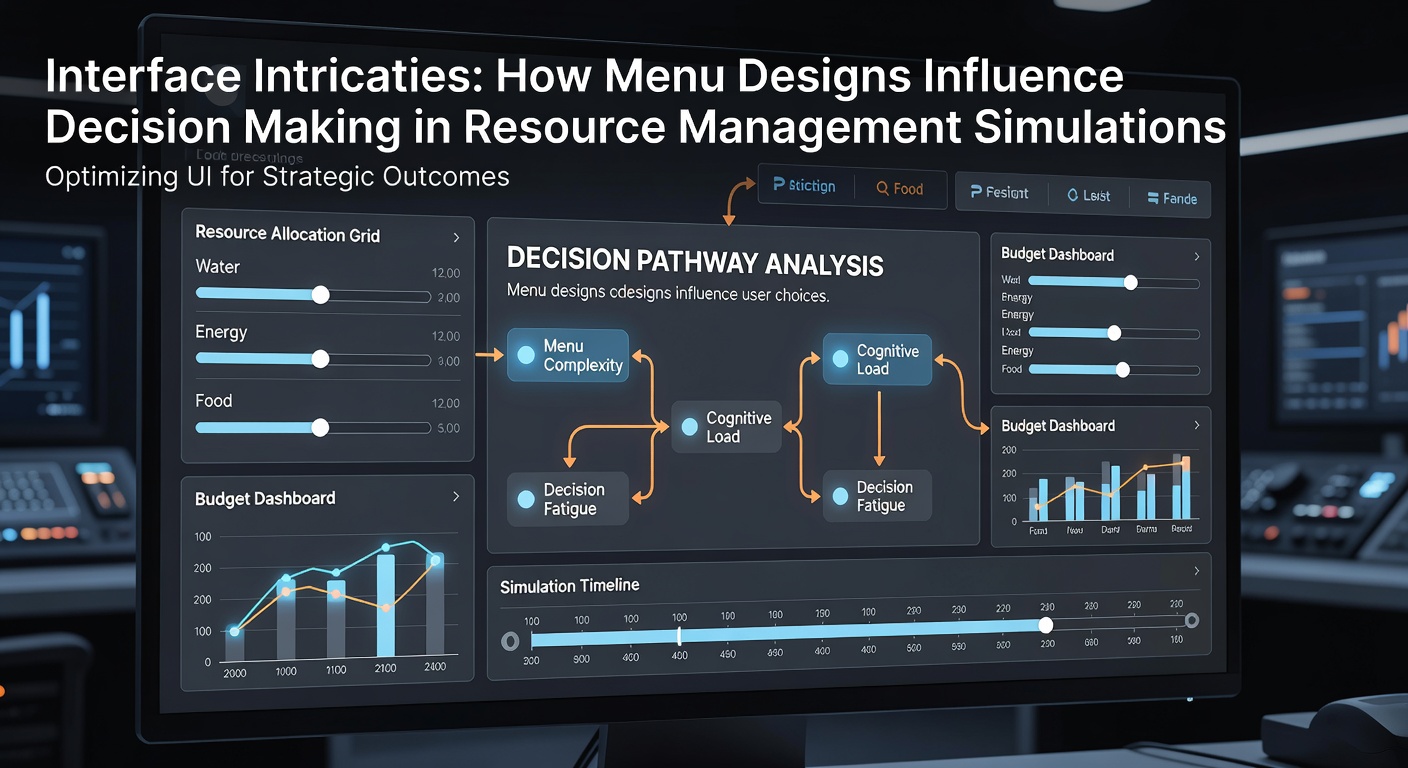
Resource management simulations place heavy emphasis on menu systems that organize production queues, inventory tracking, and allocation priorities, and these structures shape how players parse available options at each step. Data from multiple titles released between 2023 and 2025 shows that menu depth directly correlates with the speed of resource reallocation decisions, with deeper hierarchies requiring more clicks before a change takes effect. In titles that simulate factory logistics or city infrastructure, observers note that players frequently adjust strategies after encountering confirmation dialogs placed at the end of multi-step sequences.Menu Layering and Cognitive Processing
Studies indicate that layered menus distribute information across several screens, which forces users to retain intermediate values in short-term memory while navigating to the next panel. Research conducted at the University of Melbourne found measurable increases in decision latency when resource categories exceeded four nested levels, particularly in scenarios involving simultaneous adjustments to power distribution and material stockpiles. Developers have responded by introducing tabbed interfaces that collapse related functions, and figures from the 2025 iteration of a prominent logistics simulator revealed a 17 percent reduction in average session time spent inside menus after such changes.
Color coding and icon consistency further streamline recognition, since players rely on visual cues to locate sliders for workforce deployment or commodity pricing without rereading labels on every visit. When these elements remain uniform across updates, the pattern of repeated actions stabilizes faster, according to telemetry collected during June 2026 beta tests for an upcoming European-developed title.
Feedback Mechanisms and Real-Time Adjustments
Immediate visual or numeric feedback after each menu selection helps players evaluate trade-offs without leaving the current screen, and several simulations now embed live preview graphs directly beside allocation sliders. This integration reduces the number of confirmation steps required before committing resources to a new production line. A report issued by the National Research Council Canada documented how participants using preview-enabled interfaces revised their plans 22 percent more often than those working with static confirmation screens, suggesting that visible outcomes encourage iterative tweaking rather than one-shot decisions.
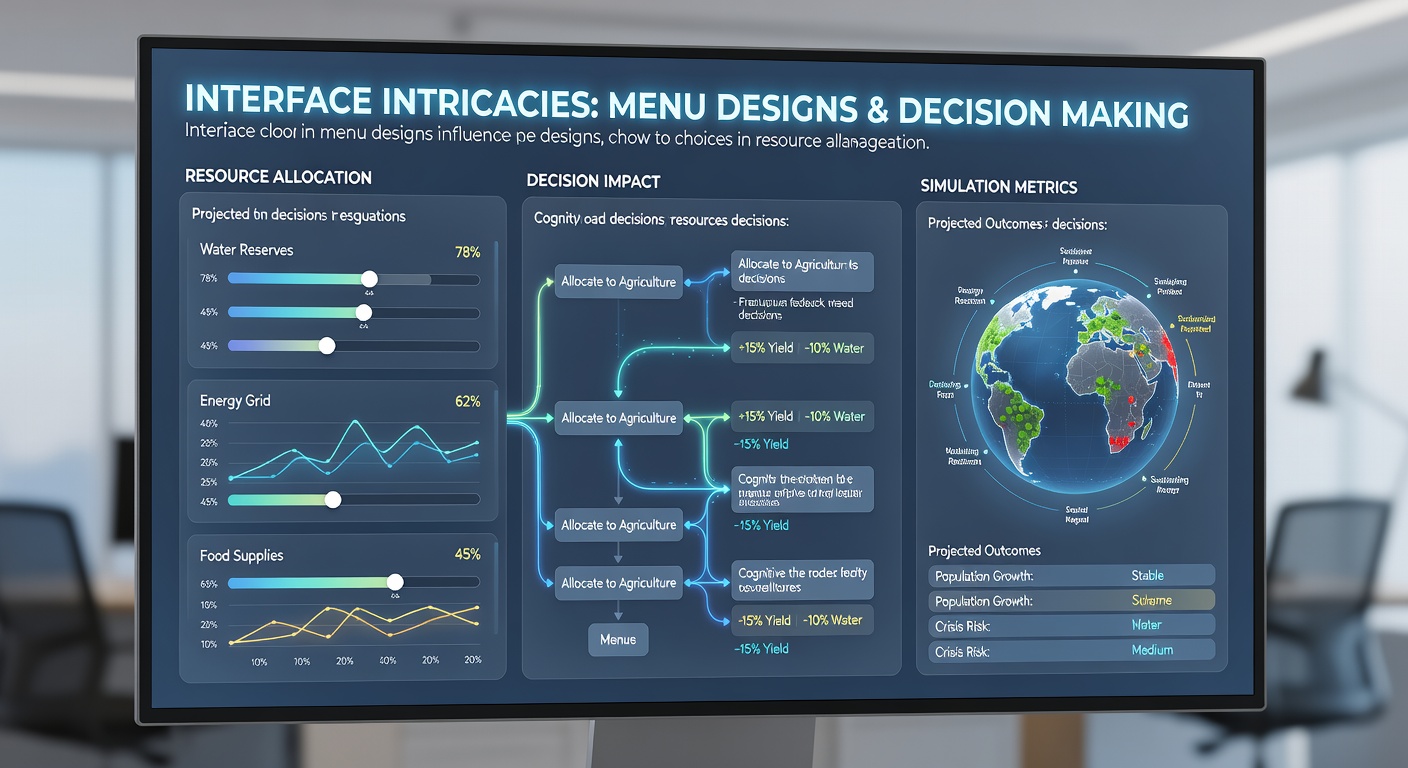
Contextual tooltips that appear on hover supply supplementary data such as projected shortages or surplus values, and these elements have grown more prevalent in recent releases. When tooltips include comparisons against previous turns, players tend to shift emphasis toward longer-term balancing rather than short-term gains, a trend tracked in post-patch analytics from multiple platforms.
Accessibility Features and Decision Equity
Keyboard navigation shortcuts and scalable text sizes allow broader participation, yet their implementation also alters the sequence in which options become visible. Data collected by the Entertainment Software Association in 2024 shows that simulations offering fully remappable controls record higher rates of complex multi-resource maneuvers among users who customize their layouts. Such customizations effectively flatten perceived menu depth for those individuals, producing decision patterns closer to those observed in streamlined interfaces.
Voice command integration, still limited to a handful of titles, bypasses visual menus entirely for certain commands and produces distinct allocation behaviors, particularly when players issue bulk transfer instructions without scanning individual category lists first.
Comparative Impact Across Platforms
Console versions often compress menu trees to accommodate controller input, whereas PC editions retain expanded trees with mouse-driven precision. Cross-platform telemetry released in early 2026 indicates that console players execute fewer simultaneous adjustments per minute yet maintain comparable overall efficiency once they reach mid-game stages. The difference appears tied to input method rather than content volume, since both versions share identical underlying simulation rules.
Modding communities have further highlighted these distinctions by releasing interface overhauls that consolidate frequently paired functions, and adoption rates for such modifications spike after major balance patches when players seek faster responses to newly altered resource values.
Conclusion
Menu architecture in resource management simulations continues to evolve through incremental refinements that respond to observed player navigation patterns. Evidence from academic studies, industry telemetry, and platform comparisons demonstrates consistent relationships between interface structure and the timing plus frequency of allocation choices. As new titles incorporate adaptive layouts and enhanced preview tools, the mechanisms through which players arrive at decisions remain closely linked to the arrangement and feedback provided by those menus.