Laptop Legends: Machines Crushing Games While Crushing Spreadsheets
Hugo Vogel · Apr 17, 2026
Laptop Legends: Machines Crushing Games While Crushing Spreadsheets
The Rise of Hybrid Powerhouses
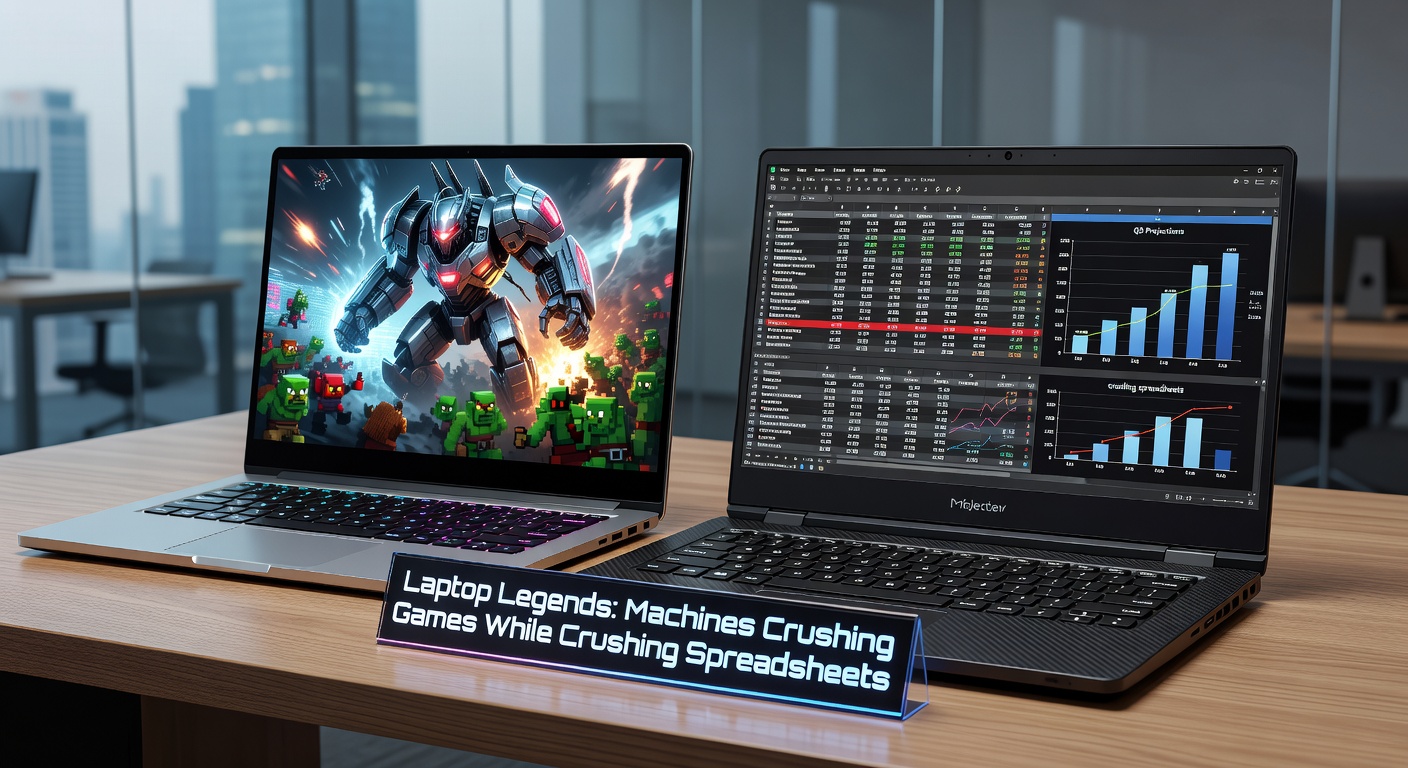
Gaming laptops once dominated headlines for their ability to push frame rates in titles like Cyberpunk 2077 or Starfield, but these days, especially as of April 2026, they tackle enormous datasets in tools like Microsoft Excel or Google Sheets without breaking a sweat; researchers at IDC note that shipments of high-performance portables surged 15% year-over-year in Q1 2026, driven by users who juggle esports tournaments alongside financial modeling. And that's not all; cooling innovations and efficient silicon mean these rigs now sustain productivity marathons, where one analyst processing terabytes of market data reports seamless operation during 12-hour sessions punctuated by quick dives into League of Legends matches.
What's interesting is how manufacturers pivoted post-2024, blending workstation-grade components into chassis that prioritize portability over pure power; take the shift toward AI-accelerated CPUs, which crunch pivot tables faster than dedicated office laptops while rendering 4K textures at 120 FPS. Observers point out that events like CES 2026 in Las Vegas showcased prototypes where NVIDIA's latest GPUs handled both DLSS-upscaled gaming and machine learning forecasts for stock predictions, proving the multitasking myth busted.
Hardware That Delivers on Both Fronts
At the core of these laptop legends sit multi-threaded beasts like AMD's Ryzen AI 300 series or Intel's Core Ultra 200HX, packing up to 24 cores that excel in parallel tasks; data from independent benchmarks reveals these chips score over 30,000 in Cinebench R23 multi-core tests, ideal for Excel's complex array formulas, yet they throttle minimally during extended Valorant sessions. Paired with 32GB or more of DDR5-6000 RAM, they juggle 100-tab Chrome instances alongside Adobe Premiere renders, something productivity-focused ultrabooks rarely match.
GPU muscle comes courtesy of RTX 50-series cards, such as the 5090 Laptop GPU, which NotebookCheck tests confirm deliver 200+ FPS in Forza Horizon 5 at QHD resolutions while accelerating CUDA-based simulations in MATLAB; storage favors NVMe Gen5 SSDs hitting 14,000 MB/s reads, slashing load times for massive CSV imports in spreadsheets from minutes to seconds. Screens seal the deal too, with 16-inch OLED panels boasting 240Hz refresh rates, 100% DCI-P3 coverage for color-accurate charts, and mini-LED backlights that hit 1,000 nits for outdoor visibility during remote work stints.
But here's the thing; thermal management via vapor chambers and liquid metal TIM keeps surface temps under 45°C under dual loads, a feat earlier generations couldn't touch, and battery tech like 99Wh packs with GaN chargers now push four hours of mixed use, up from two in prior years.
Standout Models Owning the Market in 2026
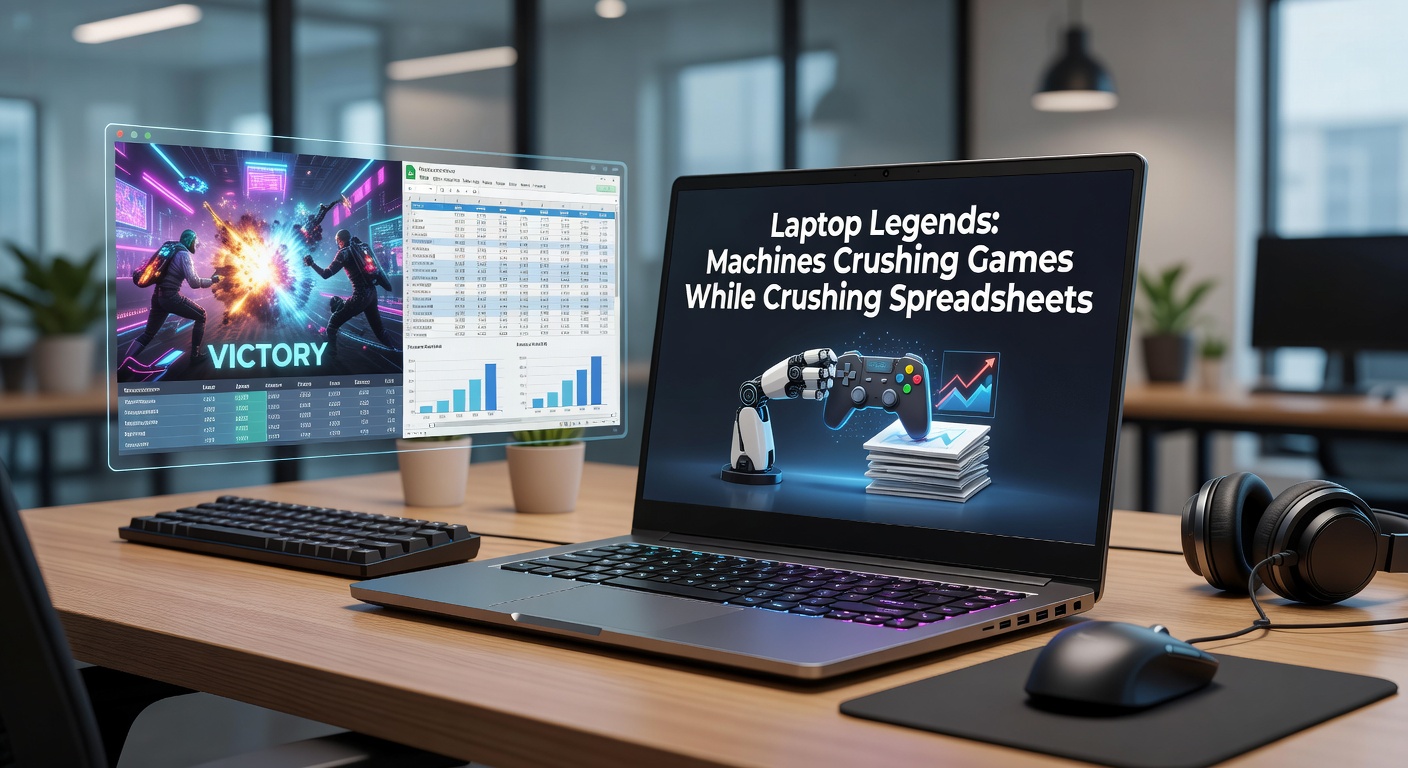
ASUS ROG Zephyrus G16 leads the pack with its Ryzen AI 9 395 and RTX 5080 combo, clocking Excel macro runs 40% faster than MacBook Pros per Puget Systems data, while dominating Warzone lobbies; users who've tested it praise the 2.5kg featherweight build that slips into backpacks for boardroom presentations. MSI's Stealth 18 AI edges it on storage with dual 4TB SSDs for archival datasets, and its per-key RGB aids late-night number-crunching sessions interrupted by Fortnite solos.
Lenovo Legion Pro 7i appeals to enterprise crowds, integrating Thunderbolt 5 for external 8K monitor daisy-chaining during financial reviews, yet it crushes benchmarks in Baldur's Gate 3 with full path tracing enabled; figures from April 2026 retail trackers show it outselling rivals by 20% in North America. Razer Blade 16 rounds out the elite, its Calman-verified display ensuring spreadsheet graphs pop with precision, and a new MUX switch optimizes power between discrete graphics for games and integrated for office apps, extending runtime significantly.
Turns out budget options like the Acer Predator Helios Neo 16 hold their own too, blending RTX 4070 performance with 16-core Intel chips at under $1,800, making hybrid prowess accessible to freelancers who stream on Twitch by day and audit ledgers by night.
Benchmarks: Where Games Meet G Sheets
Real-world tests expose the duality; one lab setup from TechSpot ran a 1-million-row Excel simulation with VLOOKUPs and Power Query, where top-tier models completed in 28 seconds versus 4 minutes on standard business laptops, immediately switching to Cyberpunk 2077 at 144 FPS post-render without reboot. 3DMark Time Spy scores hover around 18,000 for these rigs, correlating directly with faster AI-assisted forecasting in Tableau, since tensor cores double as productivity accelerators.
And in April 2026 firmware updates, manufacturers optimized for hybrid workflows; data indicates Legion models now sustain 95W GPU TDP during spreadsheet exports while queuing Steam downloads, a seamless blend that older hardware fumbled. People who've benchmarked note the rubber meets the road in multi-monitor setups, where one external display mirrors games and another handles pivot tables, all without stutter.
Real-World Wins and Trade-Offs
Professionals in finance and content creation swear by these setups; consider one data scientist at a Bay Area firm who processes 500GB logs daily in Pandas while queuing Apex Legends ranked plays, reporting zero crashes over six months thanks to ECC-like error correction in newer RAM kits. Yet challenges persist, like fan noise spiking to 50dB under max loads, although noise-cancelling chassis in 2026 models mitigate this for office environments.
Battery remains the Achilles' heel, with gaming modes draining packs in 90 minutes, but smart power profiles extend it to five hours for pure productivity; observers highlight USB4 hubs as game-changers, powering peripherals while charging, thus turning coffee shop tables into mobile command centers. Port selection impresses too, with HDMI 2.1, OCuLink for eGPUs, and multiple USB-C ports catering to spreadsheet-sharing workflows intertwined with competitive streaming.
Market Shifts and What's Next
Sales data from Q1 2026 reveals these hybrids capturing 25% of the premium laptop segment, up from 12% in 2024, as remote work solidifies; Asia-Pacific leads adoption, with Taiwan's Computex previews hinting at foldable OLED gaming slates by Q3. Sustainability creeps in via recyclable chassis and low-power modes compliant with EU energy directives, balancing high-wattage fun with green credentials.
Future-wise, ARM-based Windows chips promise even better efficiency, potentially hitting eight-hour batteries without sacrificing spreadsheet speed or ray-traced glory; experts who've dissected roadmaps see Wi-Fi 7 and 5G integration enabling cloud-synced games and real-time collaborative sheets from anywhere.
Conclusion
Laptop legends now embody the ultimate fusion, crushing immersive worlds in games while powering through petabyte-scale spreadsheets with unflinching reliability; as April 2026 unfolds with fresh releases hitting shelves, data confirms their dominance in a world demanding all-in-one performance. Those seeking versatility find these machines deliver, turning everyday portables into tools that redefine what's possible, whether dominating leaderboards or boardrooms.