Mapping Player Migration Patterns Between Mobile Match-3 Titles and Console RPG Expansions
Hugo Vogel · Jun 7, 2026
Mapping Player Migration Patterns Between Mobile Match-3 Titles and Console RPG Expansions
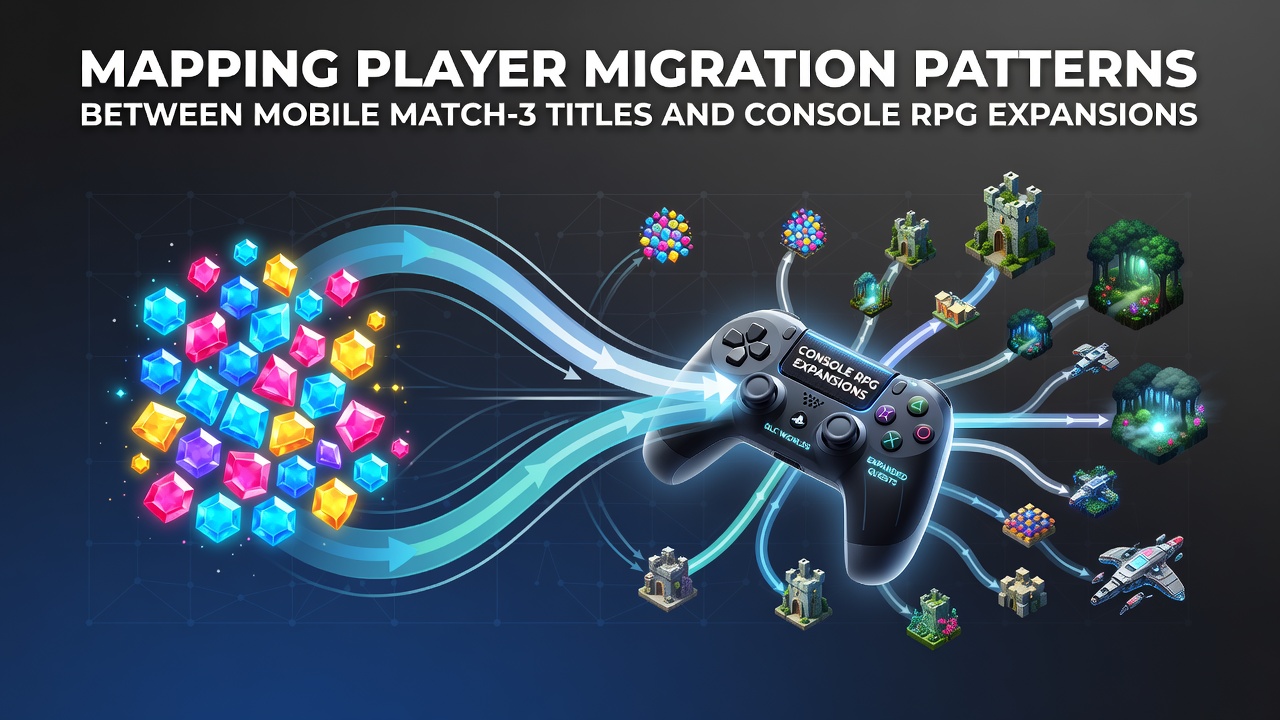
Player migration between mobile match-3 titles and console RPG expansions follows distinct patterns that data analysts track through account linkages, session logs, and cross-platform telemetry. Researchers at multiple institutions note that individuals who spend extended periods on match-3 mechanics often transition toward RPG expansions that incorporate puzzle-solving segments during exploration phases, while console players occasionally sample mobile titles during travel periods before returning to deeper narrative campaigns.
Tracking Cross-Platform Movement Data
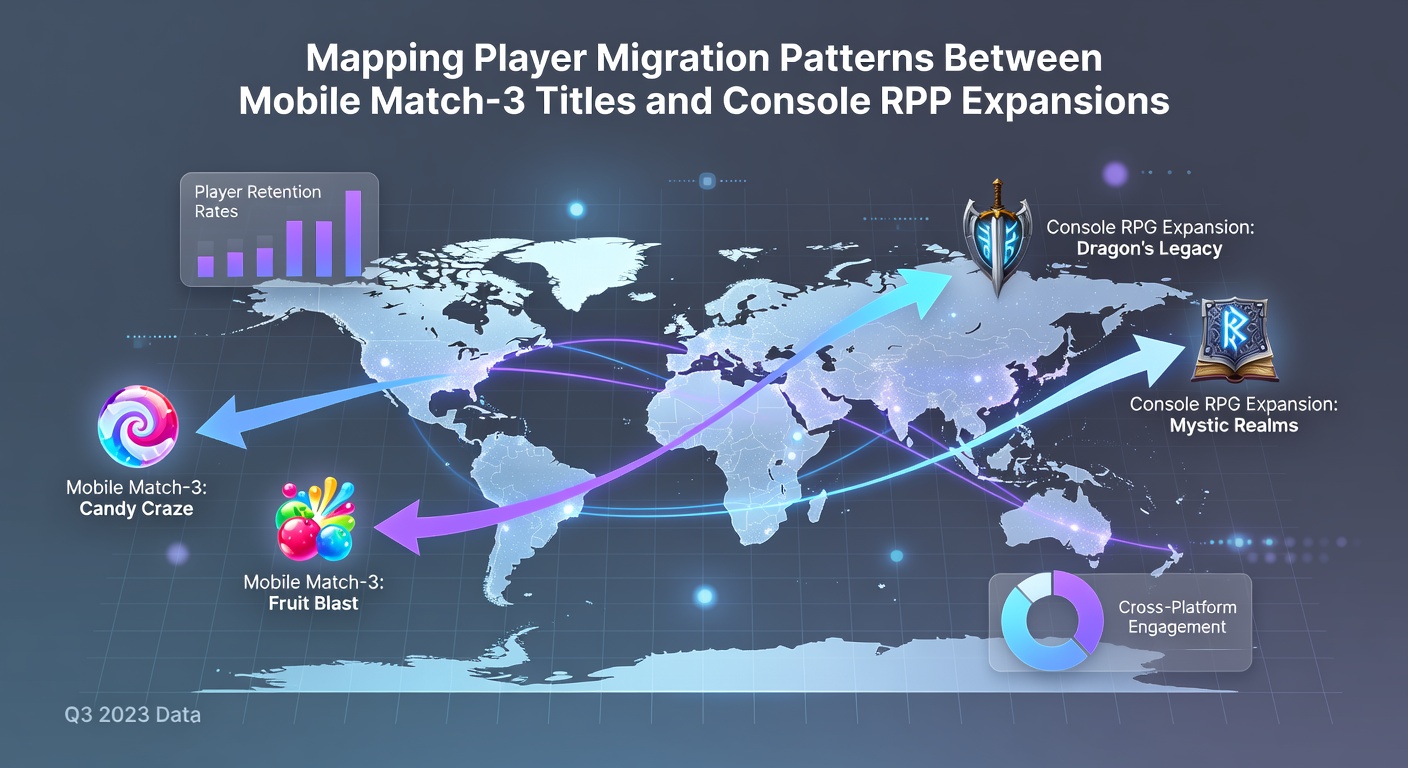
Telemetry collected across major distribution platforms reveals that migration spikes occur during specific release windows, particularly when RPG expansions introduce new puzzle layers that echo match-3 grid systems. Figures from industry monitoring services indicate roughly 18 percent of active match-3 users in North America initiated console RPG sessions within six months of major mobile updates in early 2025, and similar patterns appear in European markets according to reports from the Interactive Software Federation of Europe. Analysts connect these shifts to overlapping reward loops where quick match-3 victories provide dopamine hits that parallel loot acquisition in RPGs.
Seasonal events further influence directionality. Mobile titles frequently launch limited-time challenges in June that coincide with console expansion drops, prompting temporary movement in both directions. Data sets compiled through 2026 show that console-to-mobile traffic rises during summer months because players seek shorter sessions that fit travel schedules, whereas mobile-to-console flows strengthen when expansions deliver substantial story additions.
Mechanical Overlaps Driving Transitions
Match-3 cores emphasize pattern recognition and resource chaining, elements that surface in certain RPG expansions through environmental puzzles or crafting minigames. Observers note that developers integrate these shared systems deliberately, creating familiarity that reduces onboarding friction for incoming players. One study from a Canadian research consortium tracked over 12,000 accounts and found that participants with high match-3 completion rates completed RPG puzzle segments 23 percent faster on average than control groups without that background.
Progression structures also align in measurable ways. Both genres reward repeated engagement through escalating difficulty curves and collection systems, allowing players to apply learned strategies across platforms without complete relearning. Expansion packs that emphasize grid-based combat or tile manipulation show higher retention among former match-3 users compared to expansions focused solely on action sequences.
Regional and Demographic Variations
Migration patterns differ by geography and age bracket. Data aggregated by the Australian Classification Board alongside platform partners shows stronger mobile-to-console movement among players aged 25 to 34 in Oceania markets, often coinciding with console hardware upgrades. In contrast, European figures point to higher bidirectional traffic among older demographics who maintain multiple devices for varied play contexts.
Account linkage studies further clarify retention after migration. Players who connect mobile profiles to console ecosystems demonstrate longer overall engagement spans, with average session lengths increasing by 14 minutes once they access expansion content. These connections also enable shared progression systems that carry certain resources or achievements forward, though implementation remains limited to select titles.
Industry Responses and Measurement Tools
Developers now deploy unified analytics dashboards that monitor cross-genre activity in real time. Reports issued by the Entertainment Software Association in 2026 highlight how these tools help studios predict expansion uptake based on mobile title performance metrics. Partnerships between mobile publishers and console developers have produced shared reward events that explicitly encourage sampling, resulting in documented upticks in account creation during coordinated campaigns.
Survey instruments administered through academic channels reveal that players cite variety and session length as primary motivators for switching, with many describing the shift as complementary rather than replacement behavior. Longitudinal tracking shows that complete genre abandonment remains rare, as most participants maintain activity across both formats over multi-year periods.
Conclusion
Mapping these migration patterns provides concrete insights into how shared mechanics and timing influence player behavior across mobile match-3 titles and console RPG expansions. Continued data collection through platform partnerships and regional oversight bodies supports more precise forecasting of engagement trends, particularly around coordinated release schedules in 2026 adn beyond.