Patterns in User-Generated Mods Extending the Lifecycle of Classic Strategy Titles on Modern Systems
Bianca Schmitz · Jul 31, 2026
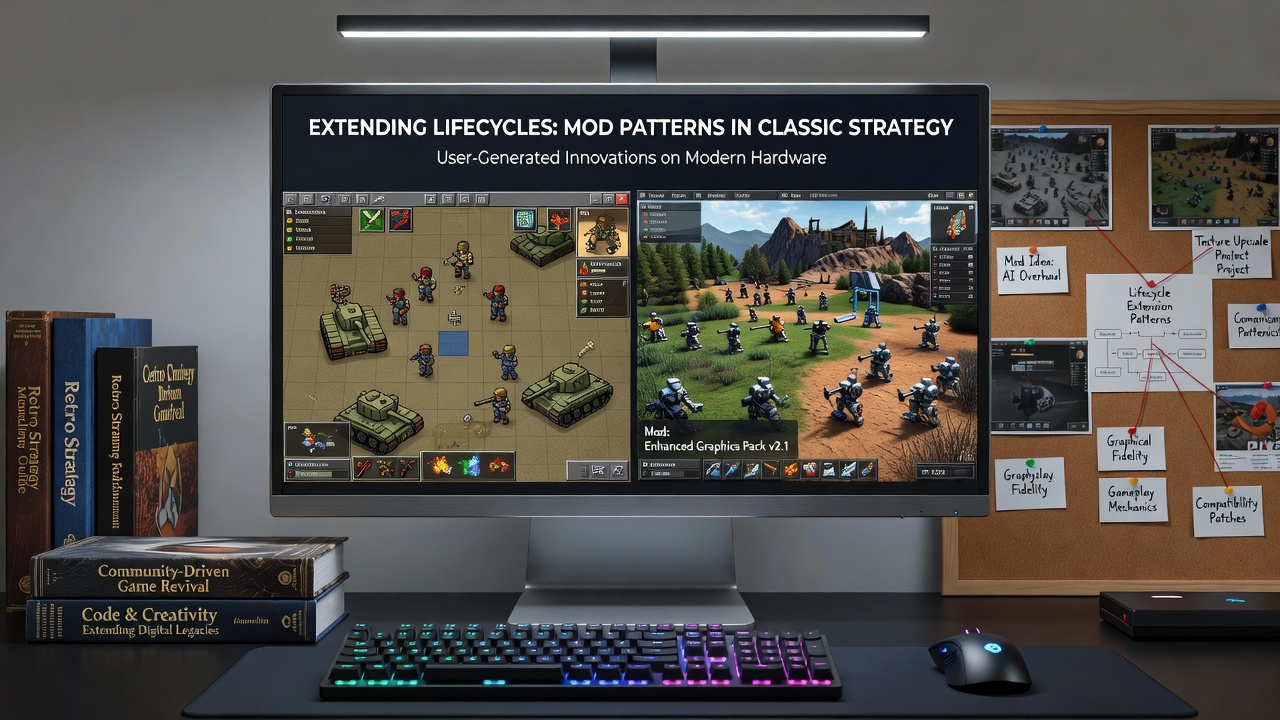
Patterns in User-Generated Mods Extending the Lifecycle of Classic Strategy Titles on Modern Systems
Classic strategy titles such as Civilization V and older Total War entries continue to attract players long after their official support ends, and user-generated mods play a central role in that sustained activity. These modifications address hardware compatibility, update visual assets, refine balance systems, and restore or expand multiplayer functions so that the games remain playable on current operating systems and displays. Data collected by community tracking sites through mid-2026 shows consistent upload patterns, with peaks following major OS releases or graphics driver updates.
Compatibility Layers and System Integration
Many mods focus first on getting older executables to launch without crashes on Windows 11, recent Linux distributions, and newer macOS versions. Developers release wrapper scripts, DLL overrides, and configuration tools that bypass deprecated DirectX calls or adjust memory allocation for modern CPUs. One project for Age of Empires II: Definitive Edition precursors documented over 12,000 downloads in the first quarter of 2026 alone, according to repository statistics hosted on ModDB. These fixes often appear within weeks of new driver rollouts, demonstrating rapid community response cycles.
Visual and Performance Upgrades
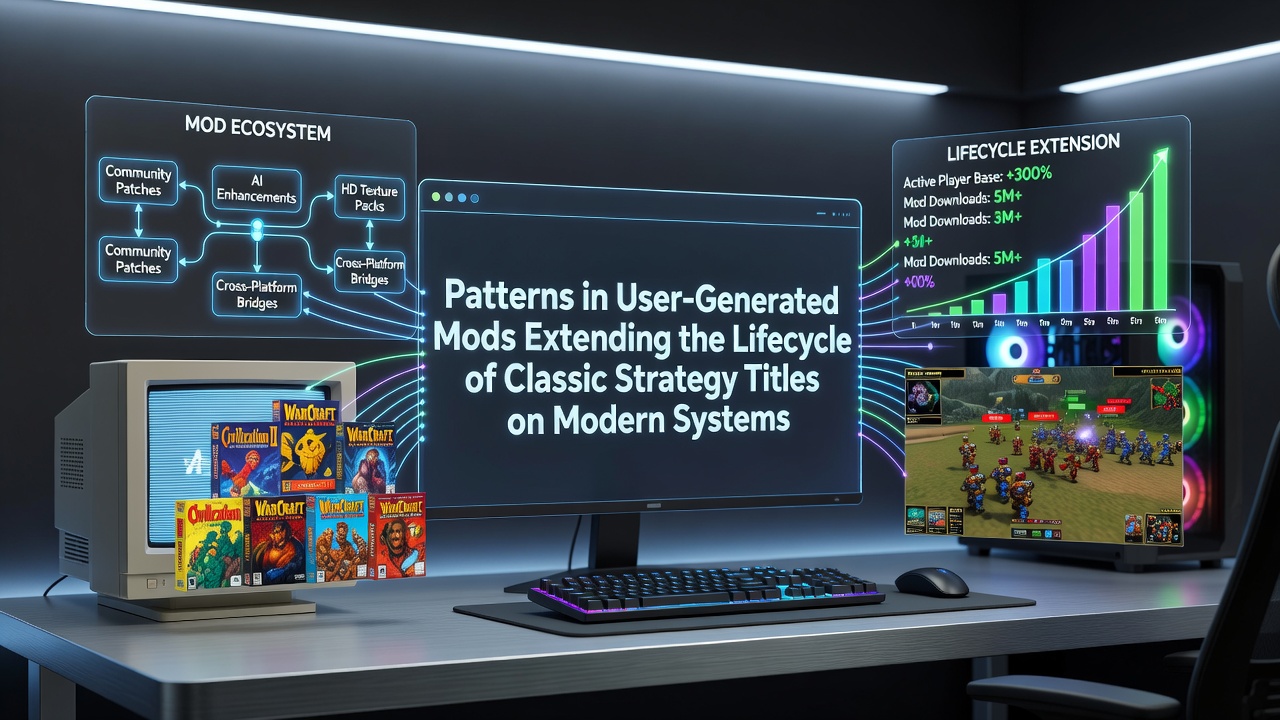
Texture replacement packs and shader updates form another major category. Modders create 4K and 8K asset libraries that replace low-resolution originals while preserving the original art direction. Performance patches enable higher frame rates and multi-monitor support, which become relevant once players move beyond the hardware available at the game's original launch. Researchers at the University of Alberta tracked mod adoption across three strategy franchises and found that visual enhancement packs accounted for 47 percent of total downloads between January and June 2026. These updates allow the titles to render cleanly on current GPUs without requiring source code access from publishers.
Balance Adjustments and AI Refinements
Gameplay mods alter unit statistics, research trees, and artificial intelligence routines to correct long-standing exploits or to introduce new strategic depth. Some projects rebalance entire factions based on aggregated player match data collected over years. Others introduce quality-of-life features such as improved pathfinding or automated trade route management. These changes frequently draw from academic papers on game theory and decision modeling, then translate the findings into practical code adjustments that run on existing engines. Observers note that balance-focused mods tend to receive the most iterative updates, sometimes receiving weekly patches when active tournaments use them as the standard ruleset.
Multiplayer and Network Extensions
Network compatibility remains a persistent challenge for older titles, yet dedicated mod teams maintain custom servers and lobby systems that function alongside contemporary matchmaking services. Projects such as the OpenRA community fork and various Civilization V multiplayer overhauls demonstrate how reverse-engineered protocols keep player counts stable. Figures from the Entertainment Software Association's 2025 industry report indicate that strategy games with active mod communities retain measurable online populations five to eight years after retail release, a pattern not observed in titles lacking similar third-party support. These server emulators often incorporate anti-cheat measures developed independently of the original publishers.
Documentation and Preservation Efforts
Alongside functional mods, extensive documentation projects catalog every change, ensuring new contributors can understand legacy codebases. Wikis, Git repositories, and video tutorials accumulate detailed histories of each patch series. This knowledge base reduces the barrier for newcomers and supports long-term maintenance even when original mod authors step away. European Games Developer Federation surveys from 2025 highlighted that preservation-focused communities around strategy franchises produce more publicly accessible technical documentation than those surrounding other genres, partly because turn-based mechanics lend themselves to readable script files and configuration text.
Conclusion
Patterns across compatibility fixes, visual upgrades, balance refinements, and network maintenance show how user-generated mods systematically address the barriers that would otherwise sideline classic strategy titles. These efforts rely on coordinated community labor, shared repositories, and ongoing adaptation to new hardware and software environments. As of July 2026 the same cycles continue without signs of slowdown, supported by stable download metrics and active contributor bases.