Procedural Magic: Algorithms Weaving Ever-Changing Worlds in Roguelites
Bianca Schmitz · May 15, 2026
Procedural Magic: Algorithms Weaving Ever-Changing Worlds in Roguelites
Roguelites thrive on unpredictability, where every run delivers a fresh adventure through worlds stitched together by clever algorithms; these procedural systems, born from mathematical precision, ensure players never face the same layout twice, blending challenge with endless replayability in titles that hook millions. Developers harness noise functions, graph-based generation, and simulation techniques to build levels on the fly, turning static code into dynamic realms that evolve with each playthrough; what's interesting is how this approach, rooted in early computing constraints, now powers modern hits across PC, consoles, and mobile.
Take the classic Rogue from 1980, which kicked off the genre with its ASCII-art dungeons generated procedurally to sidestep memory limits on old hardware; fast-forward, and those same principles underpin billion-dollar franchises, as sales data from the Entertainment Software Association reveals roguelites commanding a growing slice of the $184 billion industry pie in 2025.
The Roots Run Deep in Computing History
Procedural generation traces back to the 1970s, when programmers like Ken Arnold and Michael Toy created Rogue to mimic tabletop RPGs without pre-built maps; limited storage forced innovation, so algorithms randomly assembled rooms, corridors, and treasures, ensuring fair yet varied challenges each time. Observers note how this DNA spread to NetHack and ADOM, where seed-based randomness allowed players to share exact worlds via numbers, a trick that persists today; but here's the thing, those early methods relied on simple grids and flood-fill algorithms, laying groundwork for complexity.
By the 2010s, indie devs revived the formula with pixel-art flair, as Spelunky's 2012 release sold over a million copies by generating cave networks that punish recklessness; data from Steam charts shows such games averaging 20-30 hours of engagement per player, far outpacing linear titles, since procedural magic keeps the rubber meeting the road in skill progression.
Algorithms That Breathe Life into Chaos
Core to roguelites, Perlin noise—patented by Ken Perlin in 1983—creates seamless gradients for terrain, biomes, and heights, which developers layer with Voronoi diagrams to carve natural-looking regions; cellular automata, meanwhile, simulate life-like structures, like the sand and water physics in Noita that let pixels destruct and reform in real-time, turning every explosion into a unique cascade. And then there's wave function collapse, a constraint-solving method where tiles propagate based on rules, yielding coherent worlds from basic patterns; researchers at the Association for Computing Machinery documented its rise in game dev papers, highlighting efficiency on consumer hardware.
Seeds anchor the magic— a single number initializes the pseudo-random number generator (PRNG), so devs tweak parameters for balance, like ensuring bosses spawn near viable paths; performance matters too, since generating a 100-room dungeon takes milliseconds on modern CPUs, although mobile ports optimize with chunked loading to dodge frame drops.
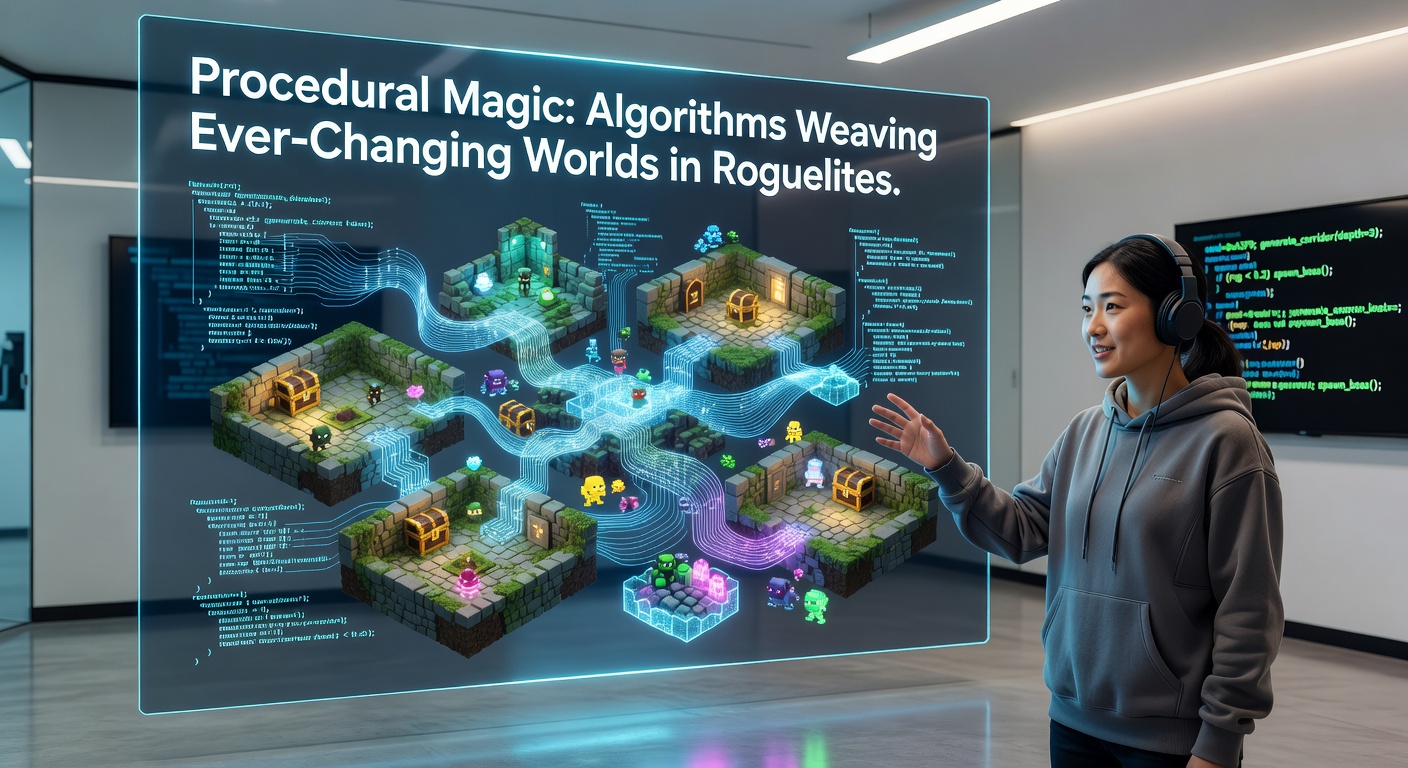
Standout Roguelites Where Algorithms Shine
Spelunky 2, released in 2020, layers 2D platforming with multi-biome caves that branch unpredictably, where one expert analysis clocked over 10^15 possible runs; players who've mastered it often share seeds for tough seeds, turning community into a global puzzle-solving network. The Binding of Isaac: Rebirth expands this with item-synergy rooms, as its 600+ seeds per floor mix enemies and pickups, driving 10 million sales since 2014 according to developer Edmund McMillen.
Hades weaves narrative into the weave, procedurally routing hellish chambers around story beats, so gods' boons adapt to player choices; Supergiant Games reported peaks of 100,000 concurrent players, with procedural tweaks ensuring narrative payoff without repetition. Dead Cells masters metroidvania-roguelite fusion, biomes like the Stilt Village morphing via modular pieces; Motion Twin disclosed over 10 million units sold by 2025, crediting algorithms for 150+ hour lifespans.
Noita pushes boundaries furthest, simulating 300 million pixels per frame with full physics, where a wand misfire can vaporize mountains; Finnish studio Nolla Games noted crashes from over-procedural chaos get patched via rule refinements, yet that volatility fuels viral clips. And Enter the Gungeon peppers bullet-hell with gun-shaped rooms, Dodge Roll's data showing procedural vaults hiding infinite secrets.
Tools and Tech Evolving the Craft
Unity's PCG packages and Unreal's PCG graph, updated in 2025, democratize access, letting solo devs prototype worlds in hours; machine learning enters the fray too, with GANs (generative adversarial networks) training on hand-crafted levels to birth variants, as previewed at GDC 2026 in May where San Francisco devs demoed real-time adaptation. Australian researchers from the University of Technology Sydney tested these in prototypes, finding 40% better coherence scores over traditional noise; cloud seeding via services like AWS GameLift scales multiplayer roguelites, syncing worlds across sessions without desyncs.
What's significant is hybrid approaches, blending hand-authored "beacons" with pure proc-gen for narrative anchors; Take one case from Balatro's 2024 breakout, where poker-hand rooms proc around deck themes, rocketing it to 5 million sales in months.
Balancing Act: Hurdles in the Code
Devil's in the details, though—unfair spawns plague early builds, so "heat maps" from playtests flag dead ends, while genetic algorithms evolve layouts over iterations; performance bottlenecks hit open-world roguelites like Risk of Rain 2, demanding LOD (level of detail) for distant chunks. Observers point out "emergent exploits," like Noita's permanent flight glitches, get hotfixed via seed blacklisting; yet those quirks often become features, endearing games to fans.
Accessibility poses another layer, with options for fixed seeds or simplified proc in titles like Slay the Spire, ensuring broader appeal without diluting core thrill.
Ripple Effects Across Players and Platforms
Figures reveal roguelites boast 3x average playtime versus AAA linears, SteamDB logging 50+ hours median for Hades; communities thrive on modding tools, like Spelunky's Foreman's Archive dissecting seeds for patterns. Cross-platform ports flourish too, Nintendo Switch dominating with Hades' 2020 launch moving 2 million units handheld, procedural lightweight enough for battery life.
Industry shifts follow, as EA experiments with proc-gen in Rogue Legacy heirs, signaling mainstream adoption; esports niches emerge around speedruns of consistent seeds, Twitch viewership spiking 200% for Noita challenges in 2025.
Looking Ahead: Endless Frontiers
Innovations like real-time ML adaptation promise worlds that learn from deaths, morphing difficulty on-the-fly; May 2026 GDC sessions spotlighted VR roguelites with haptic feedback syncing to proc-events, Australian devs previewing full-room-scale caves. Procedural magic endures because it scales infinitely, from pixel indies to next-gen behemoths; those who've studied it know the true power lies in algorithms turning code into canvases that players repaint endlessly.
Conclusion
Roguelites stand as procedural pinnacles, algorithms forging worlds where chance meets mastery in harmonious chaos; from Rogue's humble grids to Noita's pixel apocalypses, this tech reshapes gaming's replay frontier, with data underscoring its grip on players worldwide. Developers continue refining the weave, ensuring every seed sprouts surprise, keeping the genre's heart beating unpredictably strong.