Silent Strategies: How Environmental Audio Cues Guide Resource Allocation in Multiplatform Survival Titles
Bianca Schmitz · May 29, 2026

Silent Strategies: How Environmental Audio Cues Guide Resource Allocation in Multiplatform Survival Titles
Survival titles across multiple platforms rely on environmental audio cues to shape how players decide where to gather materials, when to move camps, and which areas to prioritize during extended play sessions. These sounds include rustling foliage that signals edible plants, distant water flows that mark hydration sources, and creaking wood that hints at structural weaknesses in potential shelter spots, all of which players interpret without visual confirmation in many cases.
Audio Design Foundations in Survival Games
Developers build layered soundscapes that operate independently of on-screen visuals so players can allocate limited inventory space and stamina bars based on what they hear rather than what they see at any given moment. Research from industry reports indicates that survival mechanics in titles released between 2023 and 2025 incorporated dynamic audio triggers tied directly to resource nodes, creating feedback loops where repeated exposure to specific sound patterns led players to optimize routes and reduce unnecessary exploration time. Observers note that this approach appears across console, PC, and handheld versions, although hardware differences affect how precisely those cues transmit through speakers or headsets.
Cross-Platform Implementation Patterns
Multiplatform releases adjust audio mixing to match controller vibration thresholds and screen sizes while preserving core cue reliability. On portable devices, higher-frequency sounds often receive amplification to cut through ambient noise, whereas console versions emphasize spatial positioning through surround setups. Figures from the International Game Developers Association reveal that audio teams allocate roughly 25 percent of development resources to environmental sound design in survival projects, with particular emphasis on low-volume indicators that guide resource decisions during nighttime cycles or fog events. Those who've analyzed patch notes from major updates in early 2026 confirm that studios continue refining these systems to maintain consistency when games move between hardware generations.
Player Behavior and Decision Data
Studies conducted by researchers at the University of Alberta demonstrate that participants exposed to consistent audio cues adjusted their gathering patterns within the first thirty minutes of play, favoring areas with repeated sound signals over visually identical zones lacking audio reinforcement. This shift resulted in measurable changes to inventory distribution, with players carrying fewer redundant tools once they learned to trust auditory markers for high-yield nodes. Data collected during controlled sessions showed reduced backtracking rates when sound design remained stable across difficulty settings, although the effect diminished slightly on platforms with weaker audio output capabilities.
Integration with Resource Systems
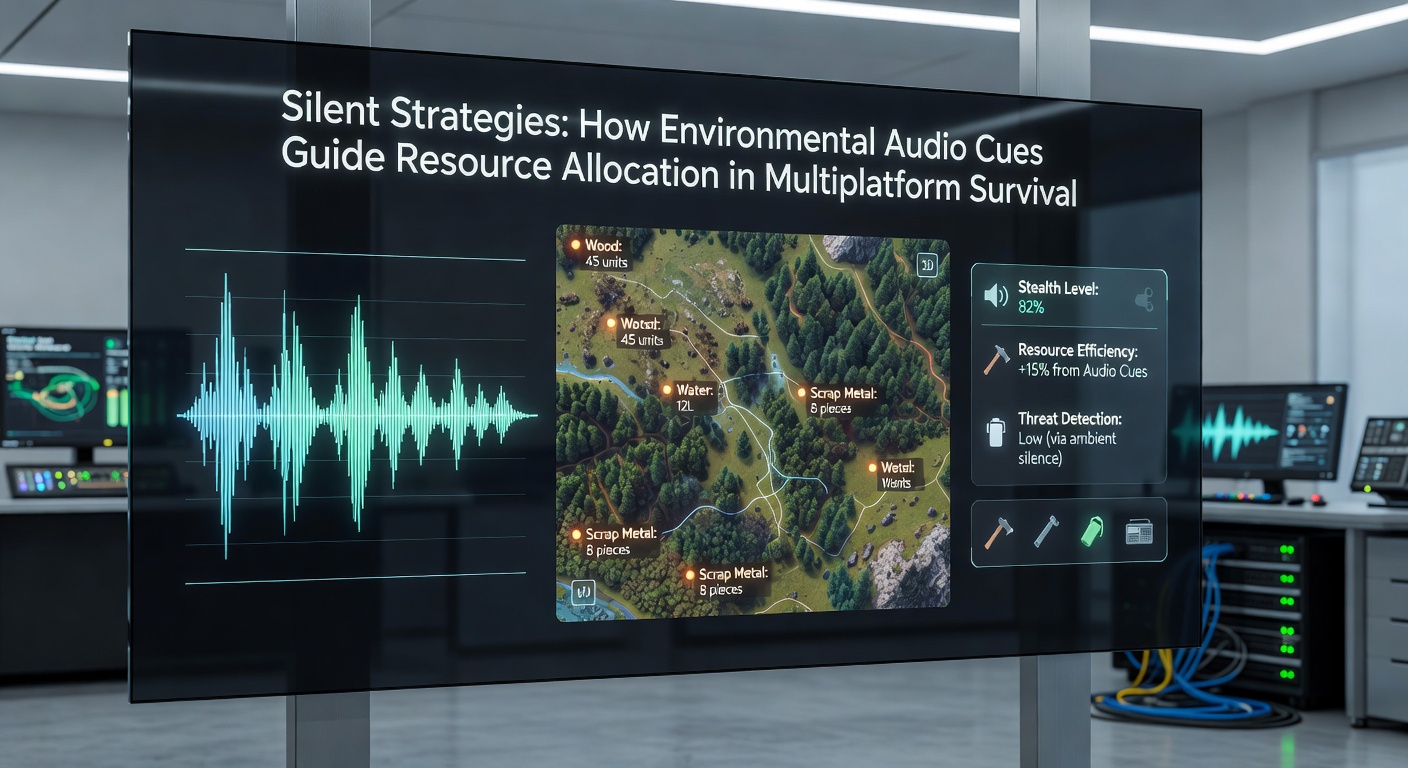
Environmental sounds connect directly to scarcity mechanics because developers map specific frequencies and volumes to item rarity levels, allowing experienced players to predict depletion rates before they reach a location. In titles supporting both single-player and cooperative modes, these cues scale in volume or complexity depending on group size so that shared audio information influences collective allocation choices without requiring verbal coordination. Reports published through the Interactive Software Federation of Europe document similar patterns in European-developed survival experiences, where sound cues tied to seasonal changes prompted players to reallocate storage priorities ahead of weather shifts that would otherwise render certain resources inaccessible.
Technical Considerations Across Devices
Hardware constraints influence cue clarity, yet developers maintain parity through adaptive compression algorithms that preserve directional information even on lower-bitrate streams. Players switching between PC and console versions frequently report that subtle reverb differences alter perceived distance to resources, which in turn affects how quickly they commit stamina or tools to a given path. Those tracking update logs note that May 2026 patches for several cross-platform survival releases included refinements to audio occlusion models, addressing feedback where indoor environments previously masked critical outdoor cues and led to inefficient resource hoarding.
Conclusion
Environmental audio cues function as an invisible guidance layer in multiplatform survival titles, directing players toward efficient resource allocation through consistent sound design that transcends visual limitations. Data from multiple research sources shows measurable impacts on player routes, inventory management, and long-term planning when these systems receive proper implementation across hardware types. Continued refinement of audio layers ensures that survival mechanics remain responsive to both individual and group playstyles while accommodating the technical realities of different platforms.