Tracing How Lighting Shifts in Open Environments Guide Stealth Choices Across Multiplayer Matches
Bianca Schmitz · Jun 23, 2026
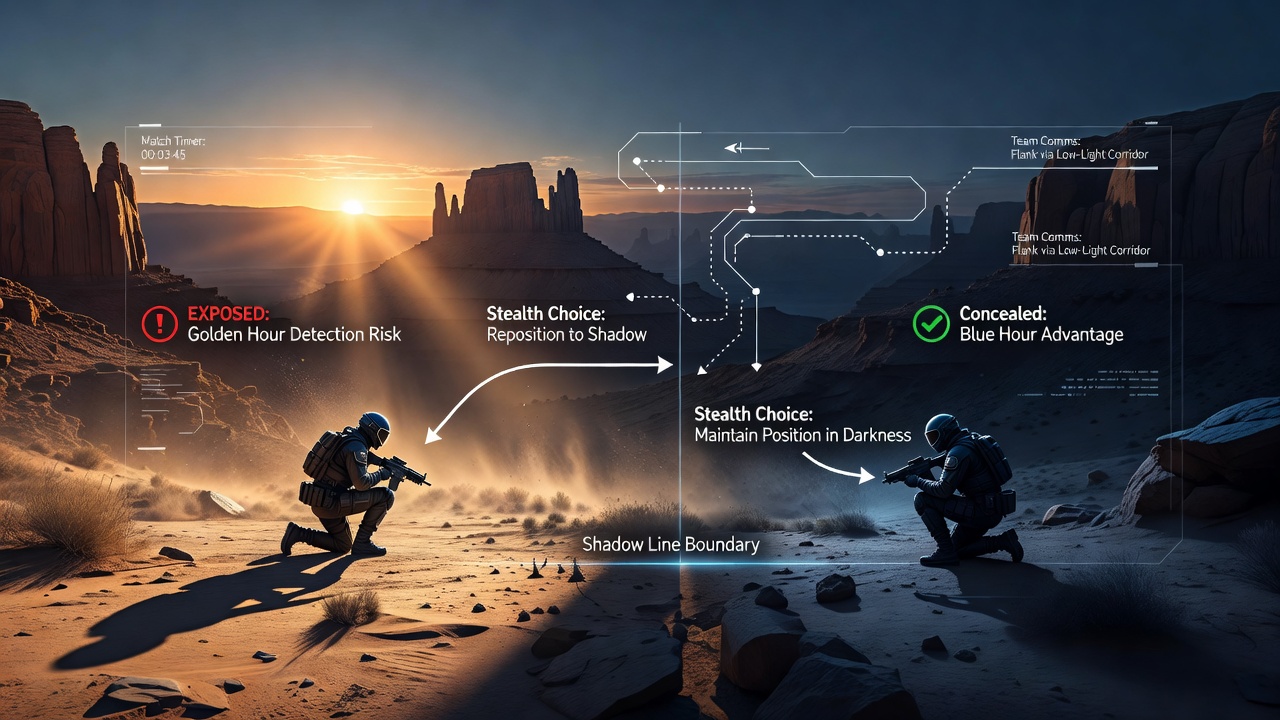
Tracing How Lighting Shifts in Open Environments Guide Stealth Choices Across Multiplayer Matches
Lighting conditions evolve constantly in open multiplayer environments and these changes shape how participants select routes, time movements, and manage visibility risks during matches. Dynamic systems simulate natural day cycles along with weather events that alter shadow lengths and intensity levels, forcing teams to reassess positions on the fly rather than relying on fixed strategies. Researchers have documented patterns where participants shift from aggressive pushes to patient waiting periods once illumination drops below thresholds that previously allowed clear sightlines across fields and structures.
Core Mechanisms Behind Environmental Illumination Changes
Game engines calculate light sources from multiple angles including directional sunlight, ambient sky contributions, and localized artificial fixtures, and these calculations update in real time as matches progress. Players encounter situations where morning fog diffuses rays into softer gradients while afternoon glare creates sharp contrast zones that highlight movement against backgrounds. Data collected across several platforms shows average session lengths increase by measurable margins when participants factor lighting into initial planning phases instead of reacting only after exposure occurs.
Multiplayer modes often layer additional variables such as destructible cover that modifies how shadows fall or temporary events like storms that scatter particles and reduce overall brightness. Observers note that coordinated groups establish shared signals to communicate when light levels cross critical points, allowing synchronized advances or retreats without verbal cues that might reveal locations to opponents.
Adaptation Patterns Observed in Competitive Play
Analysis of match replays reveals consistent behaviors where individuals hug building edges during brighter intervals and then exploit newly formed shadow pools once structures block direct rays. Teams that pre-map lighting timelines for specific maps demonstrate higher survival rates because they anticipate transitions rather than improvising under pressure. Figures from industry tracking services indicate that stealth-oriented loadouts gain popularity during evening server peaks when natural darkness extends viable concealment windows across open terrain.
One documented case involved a European tournament circuit where participants adjusted flanking maneuvers around midday light spikes that eliminated previously safe corridors. Those adjustments required rapid recalculation of distances and timings, and success correlated with prior familiarity with how particular weather modifiers interacted with the base day cycle. Such instances underscore the importance of environmental literacy alongside mechanical skill when competing at scale.
Technical Implementation Across Different Titles
Developers integrate volumetric fog, cascaded shadow maps, and time-of-day scripting to produce believable transitions that feel organic rather than scripted interruptions. These systems run on consoles and PCs alike, although hardware differences affect how smoothly updates occur during intense firefights. According to reports published by the Entertainment Software Association, multiplayer engagement metrics rise when lighting serves as an active gameplay layer instead of a purely cosmetic feature.
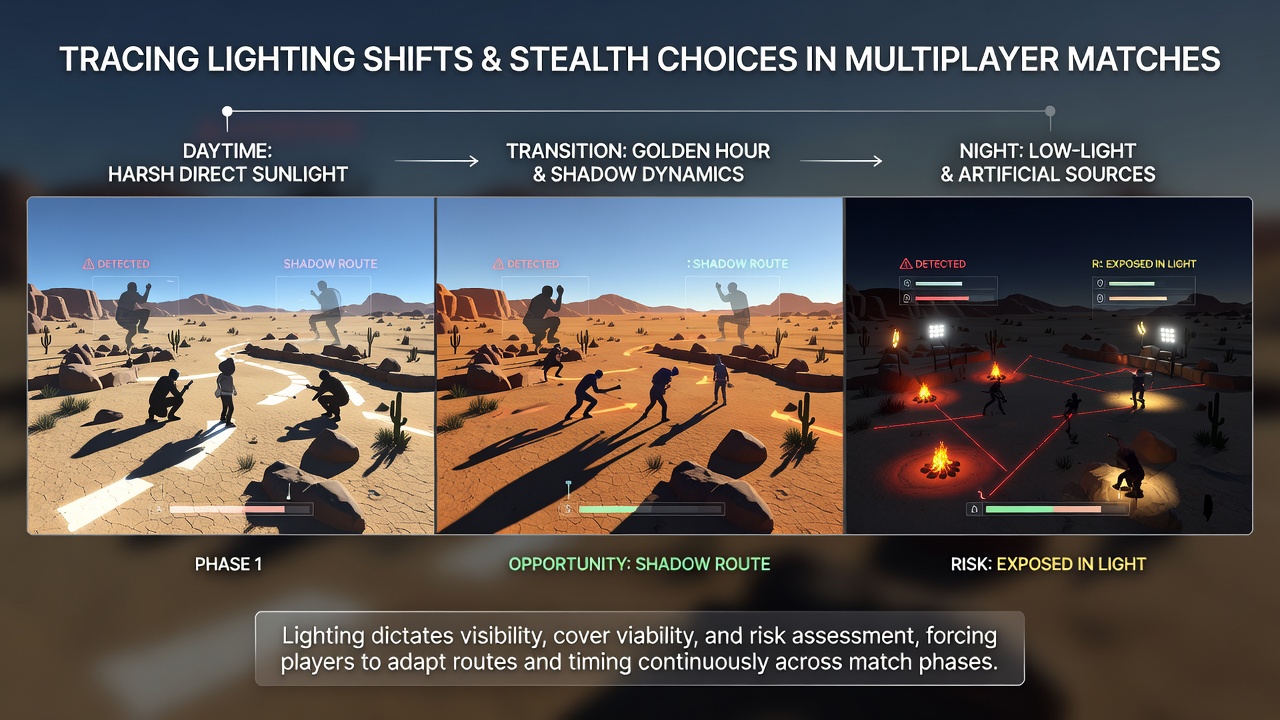
Regional developers in Australia and Canada have experimented with localized lighting rules that tie into seasonal server events, creating temporary windows where visibility mechanics invert for short durations. Participants who study these patterns through community resources or in-game observation tools often develop predictive models that inform loadout selections before matches begin. The result appears in aggregate statistics showing reduced detection rates for groups that synchronize movements with documented light cycles.
Influence on Team Coordination and Communication
Voice chat logs and ping systems frequently reference light states as shorthand for positioning updates, and this shared language accelerates decision making once everyone internalizes the same environmental cues. Studies conducted by academic groups at institutions across North America have examined how visual information density affects cognitive load during stealth segments, finding that clearer shadow boundaries reduce hesitation times for experienced players. Newer entrants, by contrast, require additional exposure to internalize the same relationships between light direction and safe movement arcs.
Matchmaking algorithms in some platforms now account for time-of-day preferences reported by users, matching groups who favor darker cycles against similar opponents to maintain competitive balance. This approach emerged more prominently around mid-2026 as developers responded to player feedback about mismatched lighting familiarity levels in mixed-skill lobbies.
Conclusion
Lighting shifts function as dynamic constraints that reward environmental awareness and punish static tactics in open multiplayer settings. Teams that integrate illumination data into broader strategy frameworks consistently navigate these variables more effectively than those treating light as background ambiance alone. Continued refinement of rendering techniques will likely expand the range of tactical options available, yet the fundamental relationship between visibility and choice remains central to how matches unfold across platforms and regions.